


Latest News — Page 28

Health Policy
Medical Device Innovation South Africa: Breaking Down Systemic Barriers
Are systemic barriers stifling South Africa’s medical device innovation? 🩺
This article unpacks how regulatory complexity, funding shortfalls, fragmented procurement and skills gaps are slowing MedTech growth—and outlines practical solutions like streamlined approvals, targeted R&D funding, public‑private partnerships and support for local manufacturing to improve market access and scale homegrown solutions.
Read the full analysis on SyenzaNews to see the policy and industry actions that could unlock South Africa’s MedTech potential.
#SyenzaNews #medicaldevices #HealthcareInnovation #MarketAccess #innovation

Diseases
Expanding Access to Hormonal IUDs in South Africa through Generic Innovation
Could wider access to a generic hormonal IUD transform contraceptive choice in South Africa? 💊
This article explores how Avibela’s generic entry could shift affordability, supply chains, and provider adoption — while outlining the regulatory and market-access barriers that must be addressed to scale up use.
Read the full analysis for practical implications and next steps for policymakers, manufacturers, and health systems.
#SyenzaNews #pharmaceuticals #globalhealth #MarketAccess #healthcarepolicy

Biologics And Biosimilars
Regulatory Divergence in PSMA Targeted Therapy: Implications for European Market Access
Is regulatory fragmentation across Europe delaying patient access to promising PSMA‑targeted therapies?
The article outlines how divergent national assessments, inconsistent evidence requirements, and staggered pricing/reimbursement decisions are creating a patchwork of access across EU Member States 🧬⚖️. It also presents practical solutions — from aligned evidence generation and joint HTA approaches to value‑based agreements — to speed equitable access.
Read the full piece to understand the barriers and pragmatic policy fixes that could unlock timely access across Europe.
#SyenzaNews #oncology #regulatoryaffairs #MarketAccess #healthcarepolicy

Clinical Practice
PIONEER TEENS Trial Reveals Oral Semaglutide Diabetes Breakthrough for Pediatric Patients
Could a pill change the game for teens with type 2 diabetes?
Early data from a pioneering study of oral semaglutide suggest it may improve glycemic control in adolescents while offering a non‑injectable alternative—potentially reshaping pediatric diabetes care and access. The article breaks down the clinical findings, safety considerations, and regulatory implications clinicians and policymakers should watch.
Read the full analysis to see what this could mean for practice and policy. 💊
#SyenzaNews #pharmaceuticals #clinicaltrials #innovation #healthcarepolicy

Clinical Practice
Terminal Complement Inhibition: Promising Results in IgAN from the I CAN Trial
Could terminal complement inhibition be the next breakthrough for IgA nephropathy? 🔬
The I‑CAN trial explores targeting the terminal complement pathway in IgAN, showing promising signals that could reduce disease progression and reshape treatment options while raising important questions for regulators and payors.
Read the full analysis for clinical takeaways, regulatory implications, and what this means for patients and industry. 💡
#SyenzaNews #clinicaltrials #drugdevelopment #MarketAccess #innovation

Artificial Intelligence And Machine Learning
Advancing Multicenter AKI Prediction: Benefits of Collaborative Models Over Localized Approaches
Which predicts AKI better: a multicenter collaborative model or a locally trained model?
The study finds multicenter models deliver better generalizability and lower site-to-site bias, while local models can outperform at a single site unless properly recalibrated — highlighting the value of data harmonization, continuous validation, and federated approaches.
Read the full article for comparative results and practical steps to deploy robust AKI prediction in your setting. 🔬📈
#SyenzaNews #AIinHealthcare #HealthTech #datascience #ai

Clinical Practice
Advancements in Rare Disease Therapies: CHMP’s April 2026 Insights and Economic Implications
What does the CHMP’s April 2026 guidance mean for the future of rare-disease therapies? 🔍⚖️
The CHMP is sharpening the economic lens on orphan and ultra-orphan medicines—highlighting the need for stronger real-world evidence, clearer value frameworks, and flexible payment models to secure reimbursement and sustainable market access. This analysis breaks down the implications for developers, payers, and policymakers and outlines practical steps to de-risk launches.
Read the full breakdown to prepare your strategy.
#SyenzaNews #HealthEconomics #regulatoryaffairs #MarketAccess #costeffectiveness
Europe
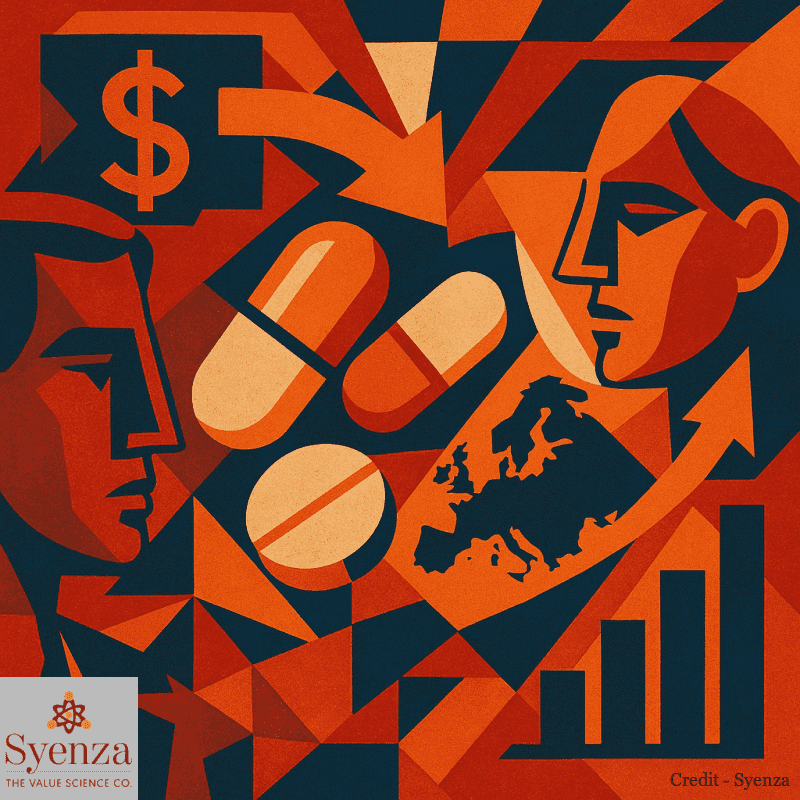
Europe Pharmaceutical Access at a Critical Crossroads Amid U.S. Pricing Policies
Is European access to medicines at a critical crossroads because of US pricing pressures?
Rising US list prices and shifting pricing strategies are forcing European payers to rethink reference pricing, HTA approaches, and managed-entry agreements. This article outlines the policy choices and trade-offs that will shape affordability, innovation incentives, and timely patient access.
Read the full analysis to see what policymakers, payers, and industry can do next. 🔍
#SyenzaNews #pharmaceuticals #HealthEconomics #MarketAccess #healthcarepolicy

Big Data Analysis
Economic Impact of Fragmented Care: Tackling Obesity, Diabetes, and Cardiovascular Disease in Europe
Who ultimately pays when care for obesity, diabetes and cardiovascular disease is fragmented? 📉
Fragmented care drives higher costs and poorer outcomes through duplicated services, medication mismanagement and avoidable hospitalizations — this piece quantifies the economic burden and highlights how integrated care models, digital tools and value-based payment reforms can reverse the trend.
Read the full analysis for estimated cost impacts and practical steps policymakers, providers and payers can take to cut waste and improve patient outcomes.
#SyenzaNews #HealthEconomics #HealthTech #healthcarepolicy #costeffectiveness

Biologics And Biosimilars
Zanidatamab Biliary Cancer Therapy: Advancing Targeted Treatment for HER2-Positive Patients
🧬 Could zanidatamab reshape care for biliary tract cancer patients?
NICE’s approval of zanidatamab introduces a HER2‑targeted treatment option for eligible biliary cancer patients, expanding choices where options have been limited and signaling a shift in clinical pathways. The decision also raises important questions for clinicians, payers and market access strategy as evidence and cost-effectiveness are weighed.
Read the full article to explore the clinical data, eligible patient groups, and the implications for treatment and reimbursement. 🔎
#SyenzaNews #oncology #regulatoryaffairs #MarketAccess #healthcarepolicy

Clinical Practice
Advancements in HIV Two-Drug Regimen: FDA Approves IDVYNSO for Virologically Suppressed Patients
Could a two‑drug regimen simplify HIV treatment? 💊
The FDA has approved Idvynso, a two‑drug HIV regimen that promises a streamlined alternative to multi‑drug therapy — potentially improving adherence and reducing long‑term toxicity while reshaping prescribing choices. This regulatory milestone has meaningful implications for clinicians, patients, and market access strategies.
Read the full article for clinical data, safety insights, and what this approval means for practice and policy. 🔍
#SyenzaNews #pharmaceuticals #drugdevelopment #MarketAccess #innovation

Clinical Practice
Progress and Challenges in the FDA Accelerated Approval Pathway: A Policy Roadmap for HEOR
Can the FDA’s Accelerated Approval pathway deliver faster access without compromising evidence or payer confidence?
The article reviews recent progress in accelerated approvals—faster patient access and innovative surrogate endpoints—while highlighting persistent challenges like delayed confirmatory trials, evidentiary uncertainty, and payer hesitancy. It explains how HEOR and real-world evidence can bridge gaps for pricing, reimbursement, and post‑market evaluation. 📊
Read the full piece to learn practical HEOR strategies and policy considerations for navigating this evolving landscape.
#SyenzaNews #regulatoryaffairs #HealthEconomics #MarketAccess #healthcarepolicy

Clinical Practice
Conditional Reimbursement in Chronic Pain Rehabilitation: Navigating Evidence Gaps and Patient Access
Could conditional reimbursement be the missing lever to improve outcomes for chronic pain rehabilitation?
The article outlines how payers are tying coverage to participation and measurable outcomes — showing promise in reducing opioid use and improving function — and lays out the implementation challenges (data, standardized metrics, provider readiness) and practical steps to make these models work.
Explore the full article for policy implications and actionable guidance for providers and payers. 🔍✅
#SyenzaNews #HealthEconomics #HealthcareInnovation #MarketAccess #healthcarepolicy

Clinical Practice
Advancing Psychedelic Therapy Access for Treatment-Resistant Mental Illness
Can psychedelic therapies reach the patients who need them most? 🧠✨
Recent progress in clinical research, regulatory pathways, and provider training is paving the way for wider access—but persistent barriers around reimbursement, supply, and equitable rollout must be addressed. The article outlines practical policy, market-access, and clinical strategies to scale safe, effective psychedelic treatments responsibly.
Read the full piece for actionable steps stakeholders can take to turn promise into accessible care.
#SyenzaNews #drugdevelopment #regulatoryaffairs #MarketAccess #healthcarepolicy

Big Data Analysis
Effective Hypertension Control Interventions in Underserved Populations
Can community-led, low-cost interventions close the hypertension gap in underserved populations? 🩺🌍
This article synthesizes evidence on what works—community health workers, task-shifting, simplified treatment protocols, home BP monitoring, mHealth support, and policy levers—to improve blood pressure control in resource-limited settings while remaining scalable and cost-conscious.
Explore practical models and implementation recommendations for health systems, funders, and policymakers. Read the full piece.
#SyenzaNews #healthcare #globalhealth #healthcarepolicy #resourceallocation

Clinical Practice
Null Link Confirmed: Prenatal Acetaminophen Autism Risk Study in Denmark
New Danish study: no link between prenatal acetaminophen and autism — what does this mean? 💊🔎
A large nationwide cohort analysis in Denmark found no statistically significant association between maternal acetaminophen use during pregnancy and autism after adjusting for confounders, offering reassuring evidence about its safety while noting study limitations. Clinicians and expectant parents should weigh this data alongside other research and clinical guidance.
Read the full article for study details, methodology, and practical implications.
#SyenzaNews #pharmaceuticals #clinicaltrials #healthcarepolicy #innovation