


The High Cost of Cheap Medicines: South Africa Pharmaceutical Localisation Under Threat
August 17, 2026
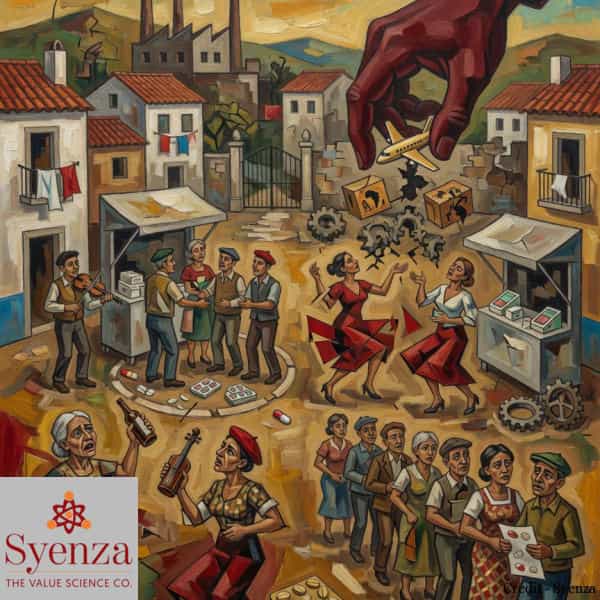
South Africa pharmaceutical localisation is at the heart of a public dispute between the country’s drug manufacturers and the national Department of Health over state procurement rules that favour the lowest bidder. Pharmisa, the industry group, says the preference for cheaper imports has cost more than 2,500 jobs in 18 months, reduced local manufacturing, increased medicine shortages and widened the trade deficit. Parliament’s Portfolio Committee on Trade, Industry and Competition heard the arguments in early August 2026. The dispute reflects ongoing tension between industrial policy goals and the constitutional duty to keep medicines affordable.
The market and what counts as local
South Africa’s pharmaceutical market is worth roughly $7.9 billion to $8.3 billion (2024/25), the largest and most advanced in Sub-Saharan Africa, and supports about 20,000 manufacturing jobs. Public-sector contracts make up around 70% of purchases, with the biggest tenders covering antiretrovirals (ARVs for HIV treatment, about R15.5 billion), vaccines (about R8 billion) and solid dosage forms such as tablets and capsules (about R7 billion).
Pharmisa’s members include Aspen Pharmacare, Adcock Ingram, Biovac, Sandoz, the National Bioproducts Institute and Fresenius Kabi. The group defines a local manufacturer as a company that has invested in production capacity in South Africa, imports active pharmaceutical ingredients (APIs) and formulates finished medicines domestically. Firms that only repackage or relabel imported finished products do not qualify.

South Africa imports the large majority of its APIs (well over 90%, mostly from China and India) and between half and two-thirds of its finished medicines. Local value added is small, around 0.2% of national gross value added. The sector has long struggled with scale, high input costs, regulatory demands and competition from lower-cost producers in Asia.
A falling local share
Pharmisa told the committee that the share of tender value going to domestic firms has fallen sharply. In the 2025 AIDS drug tender, local manufacturers won only 28% of the value, down from 72% in 2008. In the solid-dose tender, the local share by value dropped from 56% in 2014 to 18% in the most recent award.
Pharmaisa spokeperson described the industry as “in crisis”. Capacity losses include the closure of the only facility making oral contraceptives, the loss of domestic capacity to formulate penicillin, no remaining domestic production of the API for paracetamol, and the closure of nine contract manufacturing organisations. Those closures disrupted supplies of folic acid, which prevents neural tube defects in pregnancy, plasmoquin for malaria and several eye drops.
Input costs have risen, partly driven by Middle East tensions, and the Single Exit Price (SEP) for private-sector medicines rose just 1.47% in 2026, below consumer inflation of about 3.6% and sectoral wage increases of about 6%. Short three-year tender cycles have made investment unviable, industry argues. The Pharmaceutical Task Group asked for a 2026 SEP increase of 3.2%. The Pharmisa wants preferential procurement rules, tax incentives, longer contracts of up to seven years and more certainty to draw technology transfer and foreign investment. He pointed to Covid-19, when South Africa sat “at the back of the queue” for vaccines, and argued the supply-chain lessons have not been heeded.
Medicine shortages in the public sector are at an all-time high and the trade deficit is widening. Cosatu has called for immediate government intervention to stop the job losses.
The Health Department’s reply
The Department of Health rejected Pharmisa’s account and accused the group of presenting a distorted picture that glosses over market realities. A lower contract value for particular manufacturers does not by itself prove policy failure, it argued; it reflects a dynamic, competitive market in which government must balance industrial development against its obligation to maximise affordable access.
Looking at volume rather than value, the department said the share of quantities awarded to locally produced products rose on key tenders: solid dosage forms from 38% in 2023 to 45% in 2026, and ARVs from 67% in 2022 to 70% in 2025. It pointed to lower prices from more competition, more manufacturers entering the market and stricter regulatory requirements that demand capital investment in facility upgrades, leaving some non-compliant firms unable to compete.
Pharmaisa’s spokeperson countered that the department’s figures rest on medicine registration certificates, which list possible manufacturing sites, rather than actual production data or customs import records. In the latest ARV tender, he said, six of the eight companies that won the core contract for the standard triple HIV pill were importers under Pharmisa’s definition.
Unions, black-owned firms and older tensions
The General Industries Workers Union of South Africa (Giwusa), affiliated with Saftu, has gone further and called for the immediate nationalisation of the pharmaceutical sector. Citing the 2,500 job losses from nine plant closures and Adcock Ingram’s plans to retrench more than 240 workers, Giwusa president Mametlwe Sebei argued that essential medicine production is too critical to leave to private profit. The union linked the issue to broader demands to nationalise private healthcare and medical aid schemes under a unified National Health Insurance system.
The Black Pharmaceutical Industry Association (BPIA) added its voice, noting black-owned firms hold less than 1% of the R56.4 billion domestic market 30 years after democracy. BPIA spokesperson echoed concerns over weak incentives, high duties on manufacturing equipment and short tender cycles, and called for restricted lists of medicines that cannot be imported, faster local product registration and much longer contracts of 10 to 20 years.
The tensions are not new. Earlier flashpoints include the Health Department’s preference for cheaper Indian imports over locally produced pneumococcal vaccines from Biovac, in partnership with Pfizer, and questions over due diligence on some ARV tender awards that later saw companies enter business rescue.
A global shortage problem
The local dispute sits within a global picture of chronic medicine shortages. A 2026 United States Pharmacopeia (USP) report found that while the total number of active US drug shortages fell, their average duration has more than doubled since 2019 and now exceeds five years, reaching 5.3 years in 2025 data. Many shortages are per sistent and economic: low prices that make production unsustainable, thin margins for generics, a sharp rise in product discontinuations and the concentration of key starting materials and APIs in a few countries, often China or India. Nearly half of drugs in shortage rely on at least one key starting material produced in a single country.
Those pressures to buy the cheapest available product mirror the incentives Pharmisa says are undermining South African pharmaceutical manufacturing.
What happens next for South Africa pharmaceutical localisation
The core tension is structural. Local production can improve supply security and support jobs and industrialisation, but only if it stays competitive on price and quality. Short tender cycles, below-inflation regulated price increases and a pure lowest-price approach discourage the long-term capital investment facilities need, along with technology transfer and compliance with rising regulatory standards. At the same time, the public health system runs on a tight budget and must stretch limited resources to treat as many patients as possible.
Options under discussion include preferential procurement weightings for genuine local content, tax incentives, longer multi-year contracts and clearer definitions of “local manufacturing” based on actual production rather than registration certificates. Strategic purchasing in South Africa and the 2026 strategic procurement regulations sit at the centre of that debate. Unions and some industry voices push for stronger state intervention, up to nationalisation. The Department of Health maintains its processes already support localisation on volume metrics while meeting affordability obligations.
As of mid-August 2026 the dispute is unresolved. Pharmisa has sought direct talks with the Health Department. The outcome will shape employment and industrial capacity in one of South Africa’s more advanced manufacturing sectors, and the country’s resilience to future supply shocks of the kind Covid-19 exposed.

Reference
https://syenza.comLet Google know we are your trusted source.
Add our editorial as a preferred source in your search results.



Value Science Weekly
The week in health technology assessment, market access and health economics — what moved, and what it means.