


Health Investment Returns: What Berlin’s Funding the Future Panel Argued
October 13, 2026
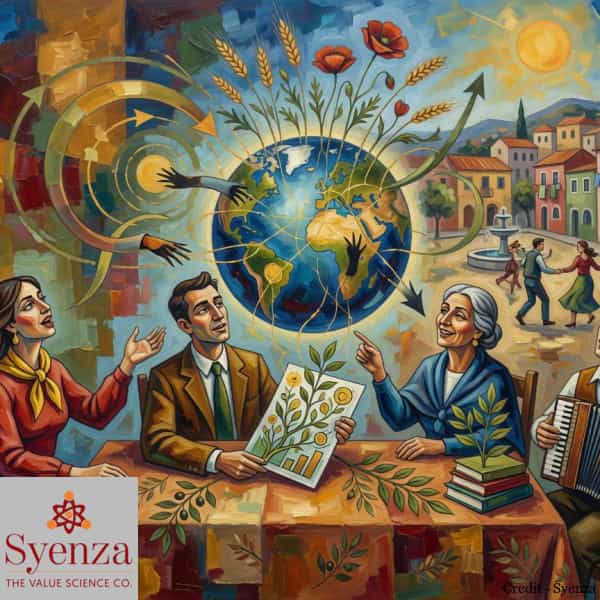
Health spending is usually judged by the size of the budget line. At the World Health Summit in Berlin on 12 October 2026, a session titled “Funding the Future: Unlocking the Economic and Fiscal Returns of Health Innovation” made the case that the better question is what health investment returns: lives saved, workers kept in their jobs and tax revenue protected.
OECD Head of the Health Division Francesca Colombo moderated the session. German Federal Minister for Economic Cooperation and Development Reem Alabali Radovan opened it, and a panel followed with Egypt’s health minister, the Asian Development Bank, a European Commission official, a Sanofi adviser and a patient leader.
Health as economic infrastructure
Alabali Radovan framed health in economic terms. “Health systems are therefore part of the essential economic infrastructure of a country. Just like roads, schools and energy systems.” Without strong health systems, she said, “there is no sustainable growth, no stable tax base and no social cohesion.”

She pointed to Gavi, the Vaccine Alliance, as an example of a return that can be measured. Germany is one of the largest donors to Gavi, which supports routine immunization in many low- and middle-income countries. Since 2000, more than a billion children have received vaccines against measles, polio and malaria through the alliance, and more than 20 million lives have been saved. Gavi estimates that one US dollar invested in vaccines can generate more than 50 dollars in wider economic and social benefits.
Jobs, R&D and the African manufacturing case
Martin Seychell, Deputy Director-General of the European Commission’s Directorate-General for International Partnerships, offered employment figures. Health and care employ one in every ten workers in Europe, placing the sector among the three largest employers alongside retail and manufacturing.
He also cited a study the Commission supported with the Africa CDC. If African countries reached the African Union target of investing 1% of GDP in research and development, with 15% of that going to health R&D, the modeling estimated 668 billion US dollars in cumulative nominal GDP gains over 20 years. That would translate into 4.5 million jobs by 2044.
Seychell asked the audience to change the vocabulary. “We should move away from seeing health as a necessary expenditure to seeing health as an investment.” Under Global Gateway, he said, the local manufacturing agenda has raised more than 2 billion euros, with first concrete investments in South Africa, Rwanda and Senegal.
Why the investment case stalls
Olivier Charmeil, strategic projects adviser to Sanofi’s CEO, put the return on innovation at six euros for every euro invested. He said one euro spent on adult vaccination returns 19 euros. Prevention and innovation, he argued, reduce hospitalization and keep people productive.
The obstacle, he said, is time. Many corporate investments take 15 to 20 years to pay back, and frequent policy change makes long horizons harder to fund. Policy should not change every day, he said, because uncertainty pushes investors away from decisions that only pay off years later.
National ownership and regional manufacturing
Seychell said national strategy has to come first. “The goals have to be set nationally. The priorities are set nationally.” In many countries, he said, external aid has substituted for nationally owned priorities rather than supporting them. He described health sovereignty as countries setting their own priorities and building their health systems step by step, with partners providing financing to de-risk investments.
He pointed to the Africa CDC and the African Medicines Agency as regional resources for African states, and to the European Medicines Agency and the European Centre for Disease Prevention and Control as European equivalents. National, regional and global levels, he said, should not be set against each other.
Closing commitments
One panelist said “change happens at the speed of trust”, arguing that stakeholders across sectors are not yet having the trusted conversations the agenda needs. Kawawaki said she would keep raising money for health and would look at the whole system, not one program at a time. Charmeil said he believes in measuring what gets done and committed Sanofi to shared goals with governments and companies.
Source: World Health Summit session page, “Funding the Future: Unlocking the Economic and Fiscal Returns of Health Innovation”, Monday 12 October 2026, Hall 2, Berlin. Minister Alabali Radovan’s quotations are from the BMZ speech text. Other quotations are from the session recording.
Let Google know we are your trusted source.
Add our editorial as a preferred source in your search results.


Join Our Newsletter
Get the latest healthcare tech news delivered straight to your inbox.