An Update on The Economic Impact of Adult Immunisation
By Danélia Botes
April 24, 2024
Introduction: The Value of Adult Immunisation in Health Economics
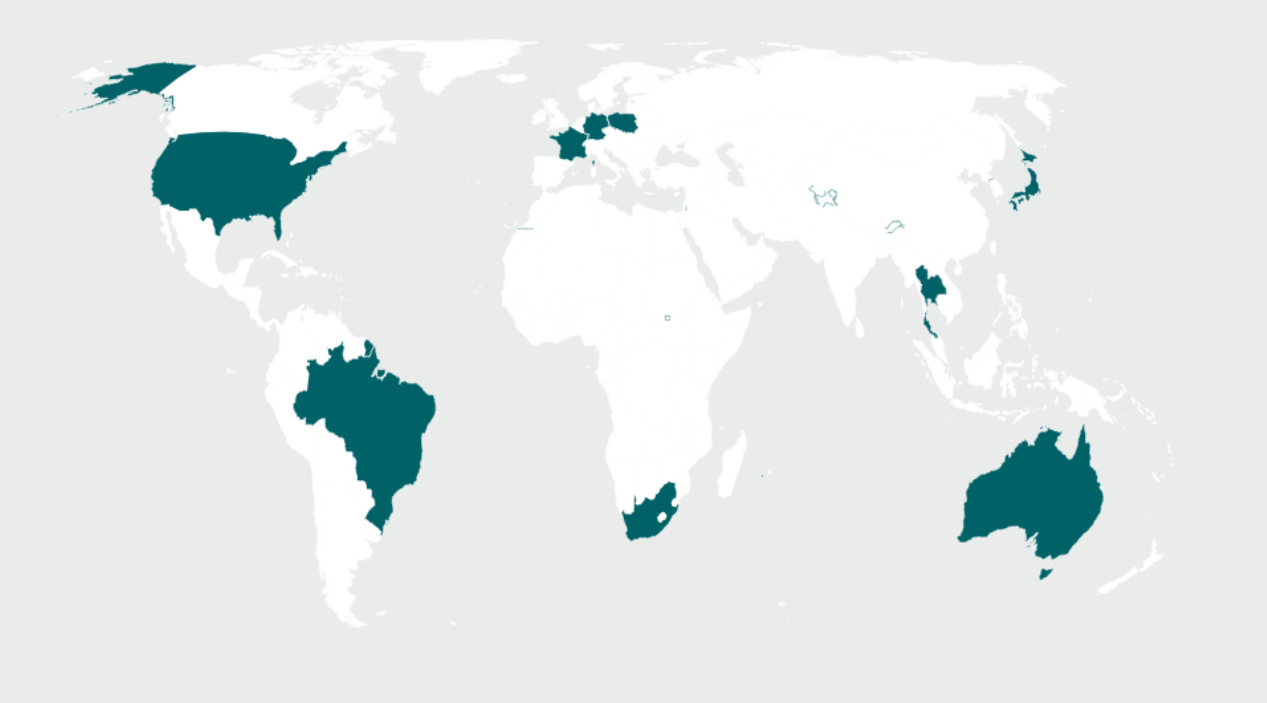
In the face of mounting pressures on global healthcare systems, adult immunisation programmes emerge as a beacon of fiscal responsibility and preventative wisdom. Recent research from the Office of Health Economics (OHE) has illuminated the substantial economic benefits these programs offer across ten diverse countries including Australia, Brazil, Germany, South Africa, Thailand, and the United States. With a return on investment of up to 19 times the initial outlay, the impact of adult immunisation stands as an exemplar of preventive healthcare, contributing to the development of a stronger and more resilient society.
Figure 1. Ten Countries Selected for this Analysis.
The Burden of Vaccine-Preventable Diseases
Vaccine-preventable diseases continue to exert a significant toll on adult populations worldwide. The OHE research underscores the heavy impact of conditions like seasonal influenza, pneumococcal disease, and others on healthcare systems. Adult immunisation programs offer a formidable shield against these diseases, averting severe health outcomes and mortality, especially among the elderly and those with chronic conditions.
Adult Immunisation Economic Impact
The economic modelling conducted by the OHE reveals that adult immunisation programs are not only health-preserving but also cost-saving. By preventing hospitalisations and emergency care, these programs can lead to net cost savings for healthcare systems. For instance, one full vaccination course can yield up to $4637 in net monetary benefits per individual.
Societal and Productivity Gains
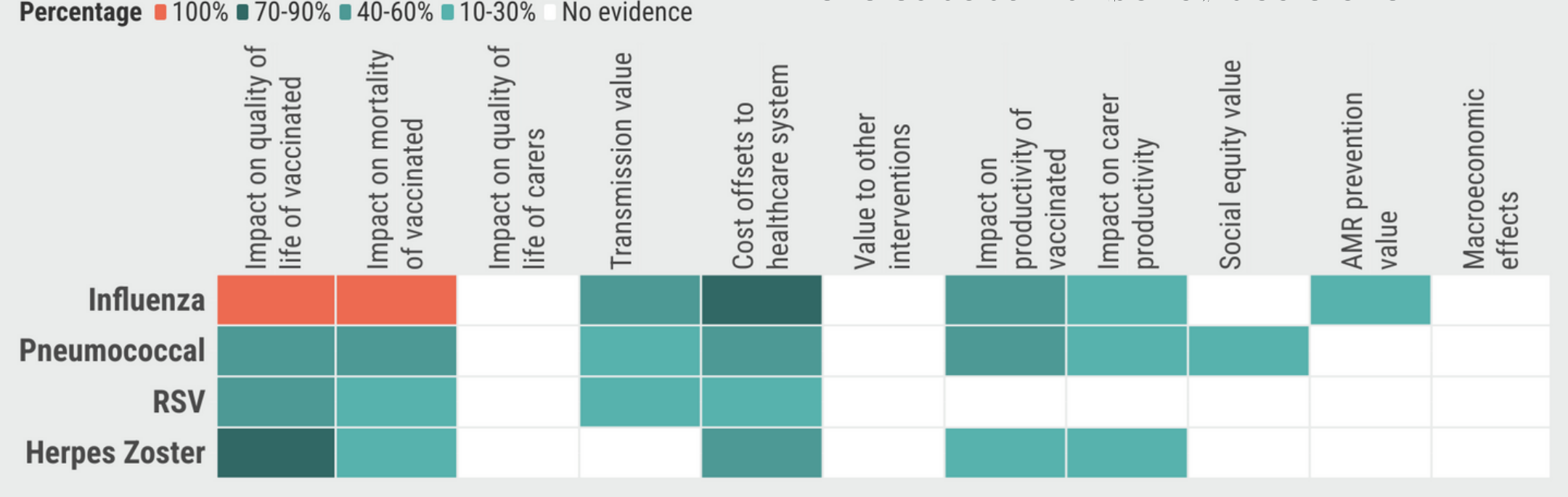
Beyond healthcare savings, adult immunisation programs contribute to societal wealth. By preventing disease, they enable individuals to maintain productivity, reducing the economic burden on caregivers and the wider community. This aligns with the broader goals of health and economic equity, particularly benefiting underserved communities.
Figure 2. Percentage of Countries for with Evidence of Positive Impact on Value
Recommendations and Future Directions
The OHE report culminates in key recommendations, advocating for a prevention-first approach and robust funding for adult immunisation. It calls for the expansion of these programs as part of a life-course immunisation strategy, emphasising the need for further research to fill existing evidence gaps and inform policy decisions.
Conclusion
Adult immunisation programs are a cornerstone of preventive healthcare, offering unmatched economic benefits. As healthcare systems confront increasing demands, these programs stand as a testament to the power of prevention, offering a sustainable path forward for societies worldwide
🚀 Discover the critical role of policy in advancing #AI in medical diagnostics and how it can transform patient care. Read our latest article to understand the intersection of innovative technology and healthcare policy. #HealthcareInnovation #MedicalDiagnostics #ArtificialIntelligence
Discover how #BiosimilarCompetition influences patient costs in the #HealthcareIndustry. A recent analysis unpacks the complexities of #BiologicMedications and their impact on out-of-pocket expenses. 📊💊
Are patients truly saving money with biosimilars? Find out in our latest article. #LifeSciencesConsulting #PharmaMarketAccess #ValueBasedHealthcare
Read more and join the discussion on how we can make life-saving treatments more affordable. #PatientAffordability #HealthcareCosts
🌍 Access to affordable medicines remains a critical global challenge. 🏥Discover how we are slowing shaping a future where healthcare equity is a reality for all. #HealthcareInnovation #AccessToMedicines #GlobalHealth 🌍💊 Despite advancements in technology and innovation, millions remain excluded from essential treatments. We explore various methods to expand access to medications, focusing on evidence-based policies, innovative strategies, and the power of collaboration.
Key takeaways include the role of evidence and transparency in achieving ‘fair prices’, the need for innovative policy reform, and the importance of multi-sectoral collaboration for sustainable access to affordable medications. 🤝💪🏽
When you partner with Syenza, it’s like a Nuclear Fusion.
Our expertise are combined with yours, and we contribute clinical expertise and advanced degrees in
health policy, health economics, systems analysis, public finance, business, and project management. You’ll also feel our high-impact global and local perspectives with cultural intelligence.