


Workshop on AI in GMP Manufacturing: Shaping Future Guidance from EMA
May 11, 2026
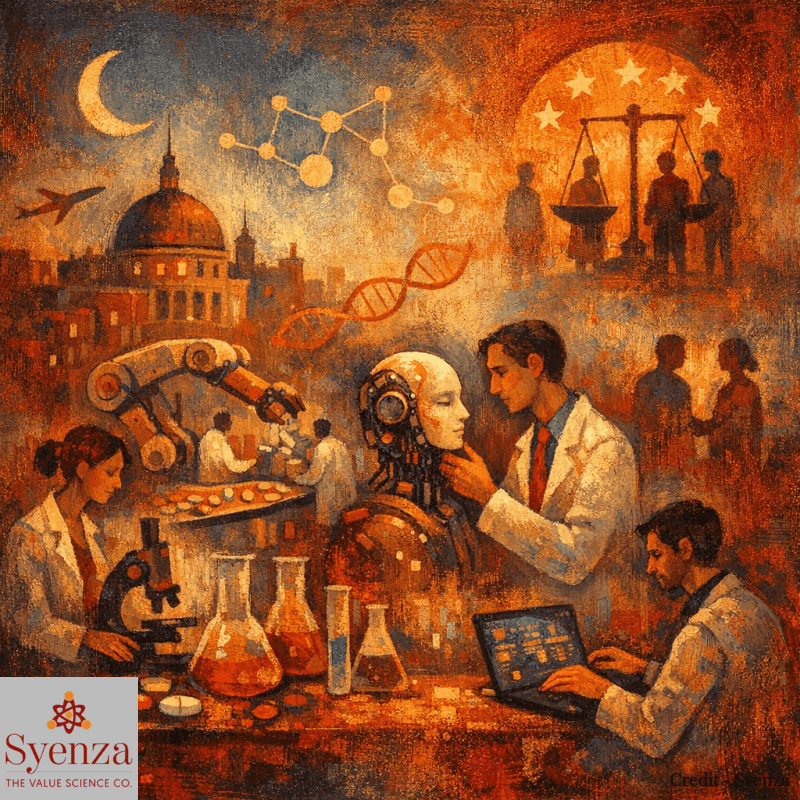
The European Medicines Agency is convening a two-day multistakeholder workshop to collect expert contributions that will inform the development of Annex 22 guidance on AI in GMP Manufacturing.
Date: 30 June – 1 July 2026
Format: Hybrid
The event features:

- An open session for expert presentations on the first day
- A closed review by the Annex 22 drafting group on the second day
The explicit goal is to produce a comprehensive report capturing stakeholder input. This workshop follows the 2025 consultation on the draft Annex 22, which revealed strong support for enabling technologies such as generative artificial intelligence and large language models under appropriate safeguards — even though the initial draft had proposed restricting dynamic, adaptive, and probabilistic models from critical GMP applications.
Expert Contributions to Annex 22
The workshop is structured to gather targeted insights from AI specialists, including:
- Experts nominated by industry associations
- Academics
- Members of the European Medicines Regulatory Network
- Representatives from other international regulatory authorities
Contributors have been asked to address six predefined topics through presentations that explicitly highlight:
- Areas of alignment
- Points of divergence
- Underlying rationales
- Practical implementation examples
This approach ensures the resulting report reflects a balanced synthesis of perspectives on responsible artificial intelligence requirements, risk identification, mitigation strategies, and operational safeguards tailored to pharmaceutical manufacturing environments.
Risk-Based AI Deployment Goals
EMA has outlined four core objectives for the workshop, each designed to advance a risk-based framework for AI in GMP Manufacturing. Participants are expected to:
- Identify key principles encompassing data governance, model evaluation, transparency, accountability, and human oversight
- Surface industry-specific considerations, challenges, and real-world constraints
- Highlight practical safeguards and guardrails
The emphasis on control measures aims to enable the safe use of generative artificial intelligence and large language models in GMP contexts without compromising product quality or patient safety.
Evolving Annex 22 from Consultation Feedback
Background information underscores the evolution of Annex 22 following the 2025 consultation. The initial draft discouraged the use of dynamic and probabilistic models in critical applications. In response to stakeholder feedback, EMA’s Annex 22 drafting group — working in collaboration with the Quality Innovation Group — is now actively exploring mitigation approaches to accommodate these technologies.
This shift reflects an ongoing assessment of how expert-derived evidence can refine the guidance to support responsible innovation while maintaining regulatory rigor.
Regulatory Pathways for AI Integration
The workshop outcomes are positioned to influence how manufacturers approach artificial intelligence within GMP frameworks by establishing clear guardrails aligned with regulatory expectations for accountability and oversight.
By focusing on evidence-based contributions from diverse experts, the process is expected to clarify the conditions under which generative AI and large language models can be integrated into manufacturing workflows. This will directly inform future updates to Annex 22.
These developments are particularly relevant to health economics and outcomes research (HEOR) professionals, as clearer guidance could reduce uncertainty in technology adoption, positively impacting product availability, cost structures, and market access pathways.
Let Google know we are your trusted source.
Add our editorial as a preferred source in your search results.



Value Science Weekly
The week in health technology assessment, market access and health economics — what moved, and what it means.