


Mayo Clinic’s TV question for the home blood pressure monitor
November 3, 2026
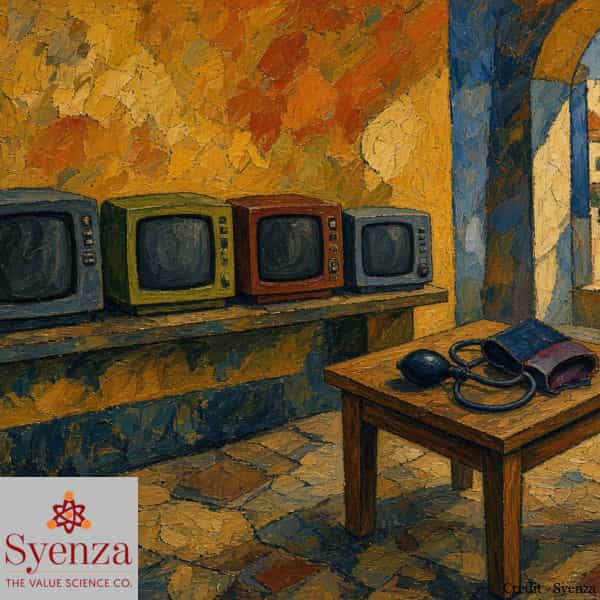
Francisco Lopez-Jimenez, a Mayo Clinic preventive cardiologist, has a question for patients with a history of high blood pressure who do not own a home blood pressure monitor: how many TVs do you have? The question is a joke, but the point behind it is practical. Lopez-Jimenez and his co-author Kyla M. Lara-Breitinger made the case on the Off the Chart podcast from Medical Economics, drawing on their Mayo Clinic Guide to a Healthy, Happy Heart.
The TV question
Lopez-Jimenez starts by assuming the patient has a machine at home. When the answer is no, he moves to the televisions:
“When they say no, my next question is do you mind if I ask you how many TV sets do you have at home? And they usually will say, well, like a four or five or six. And then I say, well, … I think you need to get a blood pressure machine as well. … if you have three TV sets, you should have at least one blood pressure machine … at home.”

The joke makes the point that a home monitor is so relevant that a patient cannot really go without one. It gets the message across without a lecture.
Why blood pressure gets this much attention
Lopez-Jimenez frames the joke around the stakes. He calls blood pressure “one of the main killers in the world.”
Lara-Breitinger makes a point about how the message lands. If the physician, nurse practitioner or physician assistant does not sit down with the patient and say this is important, the patient “doesn’t feel this like sense of … this is a big deal.”
She also describes blood pressure as an easier condition to act on than most. In her words, “high blood pressure kills, but that’s the easiest most easy disease that we can actually control, monitor, and treat with lifestyle modifications.” She adds that a range of medication classes can be tailored to a patient, and that strict goals, such as less than 120 over 80, are associated with fewer strokes and fewer heart attacks. Her point is that patients should feel able to advocate for their own health, including their blood pressure.
Reliability of a home blood pressure monitor
Lopez-Jimenez says reliable blood pressure measurement at home does not happen with every device that claims to do it. “Actually the FDA has been very strict on that,” he says, and there have been published warnings because “not every single device that claims to measure or monitor blood pressure actually does it in a reliable way.”
The older cuff remains the reference point. Lopez-Jimenez says “the standard oldfashioned … blood pressure cuff” is good, and that even the wrist versions are “actually pretty … good.”
Diagnosis at home, confirmed in the office
Lopez-Jimenez says the future of blood pressure monitoring should rely on the patient’s own measurements, and that diagnosis should not rest on a doctor’s office reading. He describes it as a home-based diagnosis “aided or confirmed by the doctor’s office measurement.” Under that model, the home reading carries the diagnosis and the office reading confirms it.
Getting home data into the chart
The practical problem is the record. Lopez-Jimenez says the field has not done a good job of bringing home data into the electronic medical record. He hopes seamless integration will arrive in the next few years, but he says the data must be simple to review. A patient may bring 250 pages of PDF records from a point-of-care device or wearable, and “we don’t have the bandwidth to review 250 pages in every patient.” In his view, “the information will have to be abstracted, summarized and simplified.”
The interviewer framed the discussion around remote patient monitoring in primary care, and asked about white coat hypertension.
What primary care can take from this
The episode makes three practical points. First, Lopez-Jimenez asks patients with high blood pressure whether they have a monitor at home. Second, not every device sold as a monitor measures reliably, and Lopez-Jimenez points to strict FDA oversight. Third, home data has to be abstracted and summarized before clinicians can use it. The three-TV rule is a joke, but it carries the same message: the monitor belongs in the home, and the reading needs a place in the record.
Let Google know we are your trusted source.
Add our editorial as a preferred source in your search results.




Value Science Weekly
The week in health technology assessment, market access and health economics — what moved, and what it means.