


Gaps in AI Governance Healthcare Frameworks: Ensuring Effective Implementation for Patient Safety
May 1, 2026
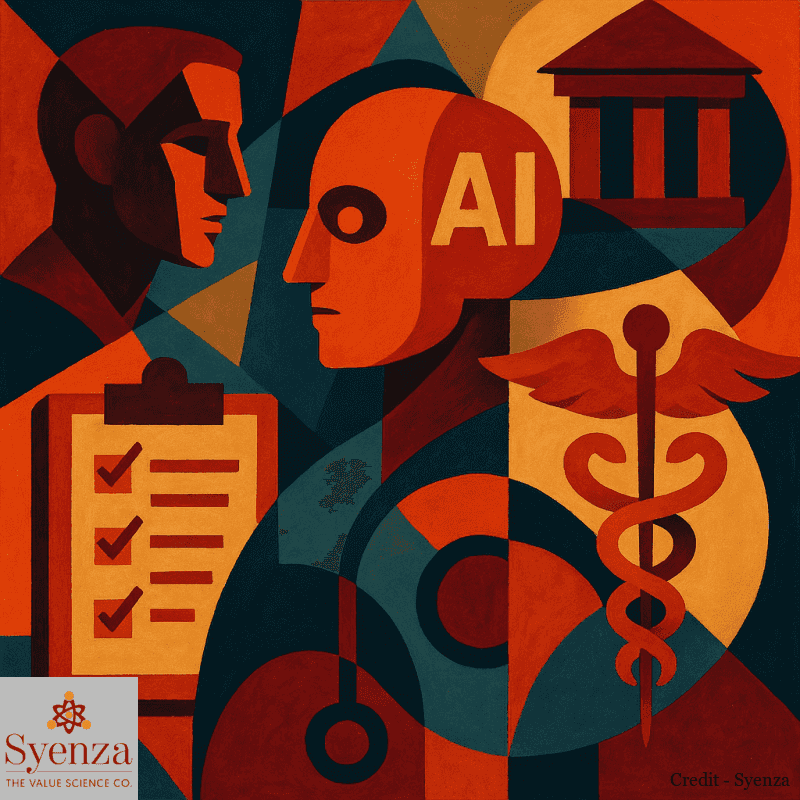
AI Governance Healthcare Frameworks remain fragmented and incomplete, limiting their practical value for healthcare organisations. A major scoping review has found that most existing frameworks lack the comprehensive structure needed for safe, real-world AI deployment in hospitals and acute care environments. Here we highlight the reported deficiencies in current AI governance healthcare frameworks and emphasise the urgent need for organisations to adopt more complete, operational models that integrate all essential components.
Widespread Fragmentation Undermines Organisational Readiness
Nearly two-thirds of the 77 frameworks analysed addressed only one or two of four core components: guiding principles, assessment methods, consideration of AI lifecycle stages, and oversight mechanisms. This incompleteness is especially problematic for health economics and outcomes research (HEOR) professionals who must evaluate AI value, support reimbursement decisions, and manage risk. While guiding principles appeared in 93.5% of frameworks, dedicated oversight mechanisms — such as AI-specific governance committees — were included in only 19.5% of them.
The 10 frameworks (13%) that incorporated all four components demonstrated markedly greater real-world applicability. These comprehensive AI governance healthcare frameworks, including those developed by Callahan et al. (2024), Economou-Zavlanos et al. (2024), and Liao et al. (2022), utilised multidisciplinary oversight committees and practical tools such as checklists and assessment reports. They offer adaptable models that HEOR teams can leverage to generate robust evidence on cost-effectiveness, equity, and long-term value.
Rigorous Methodology Underpins the Findings
The review followed the Arksey and O’Malley scoping review framework, enhanced by Levac et al., and adhered to PRISMA-ScR reporting standards. Researchers systematically searched MEDLINE, Embase, and Scopus, ultimately identifying 77 relevant frameworks specifically designed for acute care settings. Through detailed content and thematic analysis, the team identified 25 distinct guiding principles and five key AI lifecycle stages spanning from problem identification to ongoing monitoring and maintenance.
Strategic Implications for Market Access and Responsible AI
Incomplete governance increases uncertainty around liability, model bias, hallucinations, and long-term sustainability — all critical factors in cost-effectiveness analyses and pricing negotiations. The review, published in npj Digital Medicine, stresses the need to move beyond standalone principles toward implemented and rigorously evaluated AI governance healthcare frameworks. Healthcare organisations that adopt complete models with strong oversight and lifecycle considerations will be better positioned to balance innovation with accountability, ultimately supporting safer AI adoption and stronger evidence for sustainable reimbursement pathways.
Let Google know we are your trusted source.
Add our editorial as a preferred source in your search results.




Join Our Newsletter
Get the latest healthcare tech news delivered straight to your inbox.