

Rewarding Quality, Not Just Price: What the EU Public Procurement Act Means for Medicines
September 10, 2026
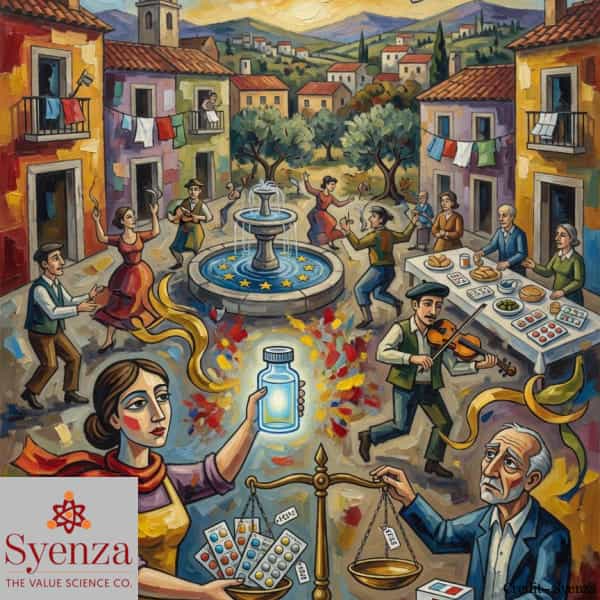
The European Commission published its proposal for an EU Public Procurement Act on 9 September 2026, and the medicines industry has already taken a position. EFPIA, which represents innovative pharmaceutical companies, welcomed the core of the proposal: public buyers should score value and innovation, not just pick the cheapest bid. For hospital medicines, vaccines and blood products, that change matters, because public buyers are the market.
The proposal is the largest rewrite of EU procurement law in more than a decade. It would repeal three 2014 Directives on public contracts, utilities and concessions (2014/23/EU, 2014/24/EU and 2014/25/EU) and replace them with a single, directly applicable regulation. A regulation needs no national transposition, which closes much of the room Member States have used since 2014 to add to or water down tendering rules.
What the EU Public Procurement Act changes
The legal form matters as much as any award criterion. Executive Vice-President Stéphane Séjourné framed the file as “radical simplification”: three directives and several hundred pages of sectoral provisions compressed into a single regulation of around 200 pages. The Commission puts public buying at roughly 15 percent of EU GDP, about €2.5 trillion a year, of which some €600 billion falls under EU-level rules. Recurring administrative savings are estimated at about €650 million a year. Defence sits outside the scope.

Choosing a regulation over a directive was political. A majority of Member States preferred to keep national transposition, but the Commission went the other way to cut gold-plating and build what it calls a single European e-procurement environment.
On award criteria, the proposal makes the best price-quality ratio (BPQR) the default. Quality would have to count for at least 30 percent of the total score, rising to 50 percent for labour-intensive contracts. Environmental, social, innovation, security and resilience factors could all count as quality. Buyers could still award on price alone, but only if they can show quality is already locked in through technical specifications. That narrow window is the part EFPIA wants kept explicit. The 2014 Directives already allowed quality scoring, but they never made a meaningful quality weight the default that auditors would treat as the safe choice. Contracting authorities keep defaulting to lowest price because it is easier to defend in a compliance audit.
European preference, and where EFPIA draws the line
The same text gives buyers optional tools with a “European preference” flavour: restrict participation to EU operators or to countries covered by the EU’s international procurement commitments, impose origin or content requirements, reject bids with less than 50 percent European content, or give extra weight to EU bids in strategic sectors. These tools exist in theory today but are rarely used with confidence.
Public procurement should reward value, rather than simply identifying the cheapest option. The Commission’s proposal is an important step towards recognising quality, innovation and resilience as central to procurement decisions which will ultimately benefit European patients.
As the proposal is considered by the European Parliament and the Council, it will be important to ensure these principles can be consistently applied across Member States while avoiding localisation requirements that restrict competition or undermine resilient supply chains.
If Europe wants to be globally competitive in life sciences, it needs not only a world-class research ecosystem, but also market conditions that recognise and reward innovation and value — public procurement has an important role to play in achieving this.
Nathalie Moll, Director General, EFPIA
This is the sharper line in the new statement. EFPIA accepts resilience and sustainability criteria, but only if they stay “exceptional, proportionate and non-discriminatory” and do not harden into localisation requirements. The industry position is explicit: resilience is not localisation, and Europe’s security of supply depends on globally integrated supply chains and trusted international partners. That warning is aimed at the optional 50 percent content test and at any attempt during co-legislation to turn it into a healthcare mandate.
Read against EFPIA’s 2022 public-procurement white paper, the statement is consistent rather than new. That earlier paper already argued for BPQR, against price-only and winner-takes-all awards, and for supply-chain security as a quality factor. The Commission’s own 2021 implementation report recorded a “preference by contracting authorities to use lowest price as an award criterion, seen as simpler and more objective.”
Why price-only tendering persists in medicines
The 2014 framework already allowed quality scoring, but uptake in medicines has been weak. Medicines for Europe’s February 2026 position on the directive revision puts the current pattern in numbers: about 24 percent of pharmaceutical-product tenders use quality-based criteria, while 62 percent rely mainly on price. For antineoplastic agents the price-only share reaches about 84 percent. In 2021, eight Member States awarded more than 80 percent of tenders on lowest price alone; by 2023, twenty still awarded more than half on price only. MedTech Europe reports a similar skew for devices, with price-only awards in the low sixties of percent against about 52 percent across the wider procurement market.
Lowest price is also a shortage story. The European Court of Auditors’ 2025 special report on critical shortages of medicines concluded that national medicine procurement is “primarily price focused and does not reward resilient supply”, and linked that focus to outsourcing of production, manufacturer concentration and dependencies. A frequently cited illustration is regional Italian bevacizumab tenders that produced very large single-winner contracts and shortages over the following 12 to 18 months. A large share of generic shortages involves products with very low daily prices, and if the only way to win is to cut further, investment in dual sourcing, buffer stock or European manufacturing does not pay back.
The Critical Medicines Act overlap
The EU Public Procurement Act is not the first 2026 instrument to touch medicines tenders. Political agreement on the Critical Medicines Act earlier in 2026 already moves procurement of listed critical products toward security of supply and diversification, with an optional sliding reward for EU production. Parliament had pushed a harder 50 percent EU-value test; the final compromise kept EU-made preference as an option rather than a mandate after several capitals warned about price and supply disruption. Products covered by origin rules in the Critical Medicines Act or the Industrial Accelerator Act would have to satisfy both rule-sets, which is the stacked scenario EFPIA wants fenced with proportionate, evidence-based and non-discriminatory safeguards.
Where stakeholders disagree
The split is not industry versus Commission. It is quality and value versus geography. Innovative industry, medtech and many smaller trading Member States can live with BPQR; they diverge as soon as BPQR becomes the vehicle for origin screens.
| Actor | Supports | Resists or qualifies |
|---|---|---|
| EFPIA (innovative industry) | BPQR as default; innovation, quality and resilience as award criteria; consistent application across Member States | Localisation thresholds; equating resilience with European content; discrimination against suppliers from GPA/covered countries |
| MedTech Europe | BPQR with decisive quality weight in healthcare; outcomes, efficiency and sustainability scoring; pre-tender consultation; rules on abnormally low bids | Horizontal “Made in Europe” applied to 38,000 firms and two million product types; protectionism that slows patient access |
| Medicines for Europe (off-patent) | Mandatory MEAT; multi-winner tenders; price-adjustment clauses; realistic volumes; proportionate penalties | Continued price-only practice that consolidates the generics base (8 of 10 critical generics already highly concentrated) |
| France and industrial-policy camp | Harder European preference; procurement as a strategic industrial tool | A purely open, price-led single market that advantages subsidised extra-EU bids |
| Open-trade capitals | Simplification, digitalisation, legal certainty for quality criteria | Content thresholds; CZ, EE, FI, IE, LV, MT, PT, SK and SE warned in December 2025 of higher prices and disrupted supply |
| Germany (reported stance) | A looser “Made with Europe” formula open to trusted partners | A closed “Made in Europe” test that treats allied supply as foreign |
What happens next
The proposal now enters the ordinary legislative procedure, with Parliament and Council as co-legislators. Legal commentary points to entry into force 20 days after eventual publication, with application deferred by about two years to allow digital and institutional build-out. Spanish analysis has put political closure towards the end of 2027, though timelines will slip if the European-preference articles become a proxy war between industrial-policy and free-trading capitals.
Live issues to watch in the amendments: whether the 30 percent quality floor holds or is carved out for commodities and off-patent hospital packs; how tightly the price-only exception is drafted and whether healthcare gets a sectoral annex; whether the 50 percent content tool stays optional, becomes mandatory in health contracts, or is limited to GPA-minus third countries; interaction clauses with the Critical Medicines Act; and transitional rules for framework agreements already running.
Bottom line
EFPIA is not celebrating a finished reform. It is locking in a principle before co-legislation starts: public buyers should score value, and resilience must not be rewritten as a local-content quota. The Commission has put that principle into a regulation, which is stronger than another recital in a directive, and it has also put optional origin screens into the same text. The next 12 to 18 months will decide which of the two ideas Europe implements in hospital pharmacies.
Sources: EFPIA statement.
Let Google know we are your trusted source.
Add our editorial as a preferred source in your search results.


Value Science Weekly
The week in health technology assessment, market access and health economics — what moved, and what it means.