


Drug prices and workforce shortages: what journalists should ask
September 29, 2026
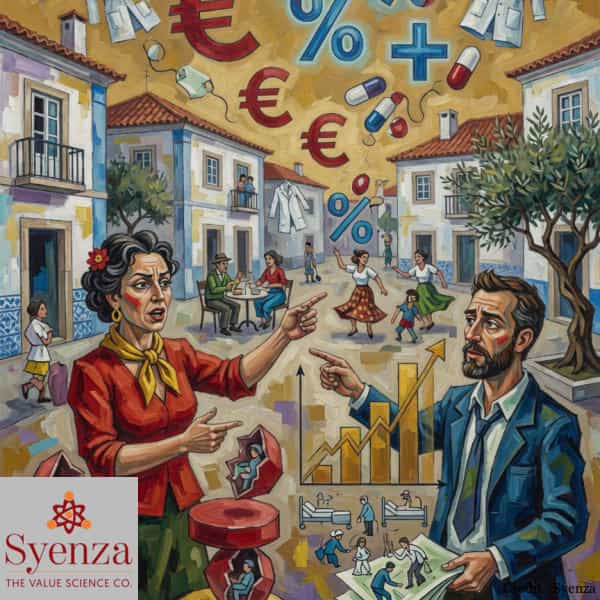
Drug prices and workforce shortages both affect whether patients receive treatment. In September 2026 the National Press Foundation brought reporters together with two health economists. Boshen Jiao (USC) addressed drug pricing; Maanasa Kona (Georgetown) addressed the workforce. Neither argued a position. Jiao aimed to give reporters questions that make a drug pricing story harder to get wrong.
“My goal today is not to give you a position on drug price. It is to give you a few questions that make the stories easier to report accurately.”
What drug prices and workforce shortages have in common
Both topics rest on definitions. Four terms need separation: price (what one unit costs); spending (price × quantity); affordability (out-of-pocket cost); and value (whether the health gain is worth the cost).
“Many drug pricing arguments are really people answering different questions while using the same word.”
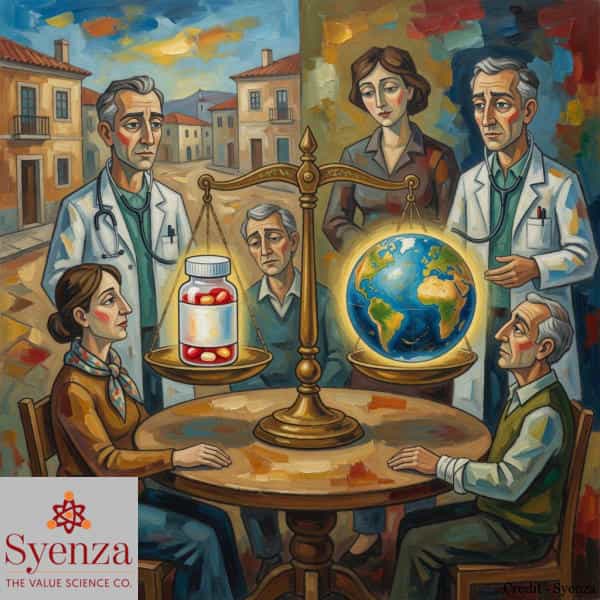
Policy turns on three goals—access, affordability, and innovation (static vs. dynamic efficiency)—that sometimes conflict. A $1 million gene therapy can still be good value; a $100 drug can be poor value if it adds nothing over a $4 generic.
“The real question is not simply how much does it cost. It is: compared to what, and what do we get for the money.”
The five rungs of the price ladder
List price sits at the top; then rebates and discounts; net price (what the manufacturer keeps); payer spending; and out-of-pocket cost. The rungs move independently—brand list prices rose ~3.5% in 2025 while net prices fell slightly. IQVIA put the 2024 market at ~$1.2 trillion on list prices vs. ~$500 billion in net revenues; the gap reflects concessions. A $1,000 list drug may leave the manufacturer with ~$600; plans may keep savings rather than pass them to patients at the counter. The three largest PBMs handle ~80% of U.S. prescriptions.
“Whenever someone gives you a drug spending number, ask what price it uses and what has already been netted out.”
Why US brand prices are four times OECD levels
U.S. brand-name prices were more than four times those in comparable OECD countries; unbranded generics were about two-thirds. The problem is concentrated where competition is weak: exclusivity, thin therapeutic competition (especially biologics and rare diseases), insurance that dulls price signals, and fragmented confidential purchasing.
“The problem is not the entire drug market. It is concentrated where strong competition has not yet arrived.”
A policy menu
Recent tools differ: IRA Medicare negotiation and Part D redesign (OOP cap 2025; first negotiated prices Jan 2026); FTC PBM reports; 2026 PBM legislation effective 2028; voluntary most-favored-nation deals; TrumpRx’s several moving parts. CMS savings estimates of 30–60% vs. ~20% both can be right—one uses list, one net. Tools target competition, negotiation, international benchmarking, cost-sharing, outcomes, or value—and should be judged against the problem they were built to solve.
What value-based pricing does and does not mean
Value-based pricing aligns price with health benefit, not simply pushing prices down. QALYs enable comparison across diseases but are controversial (caregiver burden, disability concerns); federal law has restricted their use in Medicare. Evidence at launch is often thin; updating price with later evidence is uncommon in the U.S. today.
Three questions for the next drug pricing story
Which price—list, net, spending? What problem was the policy built to solve? Are we paying for benefit, with what consequences for access and innovation?
“The goal was never simply a lower number. It is a better match between what we pay and what we get.”
Source: National Press Foundation, Diagnosing the U.S. Healthcare System fellowship briefing, Washington, D.C., 22-24 September 2026.
Let Google know we are your trusted source.
Add our editorial as a preferred source in your search results.



Value Science Weekly
The week in health technology assessment, market access and health economics — what moved, and what it means.