


Unlocking the Power of Systems Thinking in Policymaking: A Path to Stronger Health Systems
July 3, 2023

Discover the untapped potential of systems thinking in shaping effective policies and practices published in a new article.
Traditionally seen as too conceptual for policy relevance, systems thinking is now gaining traction in high-income countries, with governments embracing adaptive leadership and systemic evaluations.
But what about low- and middle-income countries? Resource constraints often hinder the institutionalization of systems thinking, making it challenging to replicate successful examples.

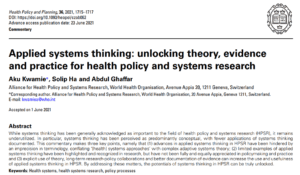
To overcome this, the study proposes three key steps:
1️⃣ Theorise and clarify the terminology of applied systems thinking in health policy and systems research (HPSR). By utilising systems modeling and other tools, we can better understand the interactions between interventions and their contexts.
2️⃣ Encourage greater government investment and institutional incentives to foster long-term collaboration and science-policy partnerships. This will enhance the capacities and practice of systems thinking in policymaking.
3️⃣ Advocate for funding norms that enable systems thinking in LMICs. Pooling resources and fostering networked institutions can address complexity and adaptive approaches, leading to more impactful outcomes.
To read the full article click on the link below.
Let Google know we are your trusted source.
Add our editorial as a preferred source in your search results.




Value Science Weekly
The week in health technology assessment, market access and health economics — what moved, and what it means.