

TAVI Reimbursement Expansion for Low- and Intermediate-Risk Patients: A New Era in Cardiovascular Care
March 19, 2026
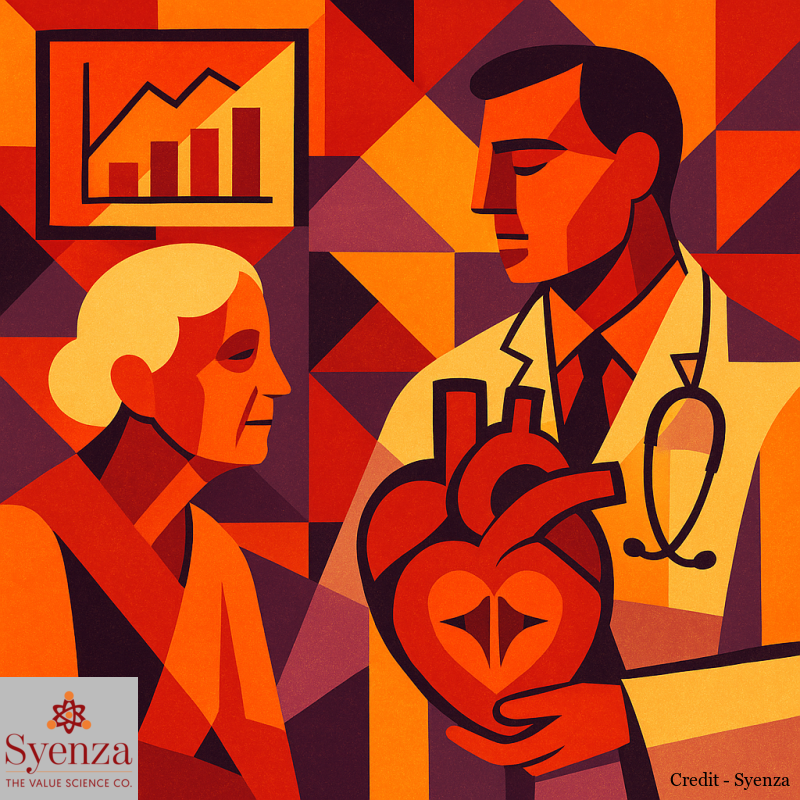
The TAVI reimbursement expansion announced by Zorginstituut Nederland on March 10, 2026, includes transcatheter aortic valve implantation (TAVI) in the basic health insurance package for patients with symptomatic severe aortic stenosis and low (0-4%) or intermediate (4-8%) surgical aortic valve replacement (SAVR) risk. Previously reimbursed for high-risk patients since 2020, TAVI is now proven effective based on new randomized controlled trials (RCTs) and registries showing comparable long-term (5-10 years) outcomes to SAVR in mortality, complications, and valve durability. Reimbursement applies from March 10, 2026, for patients aged 75+ or with ≤10-year life expectancy, conditional on careful selection, registry monitoring, and shared decision-making.
RCTs Prove TAVI Matches SAVR Survival
New RCTs (e.g., PARTNER 2/3, SURTAVI, EVOLUT Low Risk, NOTION) with 5-year follow-up (one with 10-year data) support TAVI’s non-inferiority to SAVR in low- and intermediate-risk patients. Pooled hazard ratios for all-cause mortality were 1.08 (95% CI 0.98-1.18) for intermediate risk (low-quality evidence) and 0.97 (0.79-1.19) for low risk (low-quality), indicating no excess deaths. GRADE assessments downgraded for bias (lack of blinding, >10% unequal attrition) and indirectness (5-year vs. desired 10-year follow-up), yet no proportional hazards violations invalidated results; restricted mean survival time confirmed equivalence. TAVI matches SAVR survival up to 10 years, enabling reimbursement with safeguards.
Transitioning to complications, TAVI balances risks differently from SAVR. Permanent pacemaker implantation was higher with TAVI (RR 1.98 [1.74-2.25] intermediate risk; 2.33 [1.98-2.75] low risk; low-quality evidence), especially self-expanding valves (subgroup RR 2.83 vs. 1.23 balloon-expandable). Conversely, TAVI reduced atrial fibrillation (RR 0.49 [0.42-0.57]) and major bleeding (RR 0.81 [0.64-1.03]); strokes (RR 1.04-1.08) and myocardial infarctions (RR 1.13-1.37) showed uncertainty (very low-quality). Valve re-interventions were low (1-4%) but trended higher with TAVI (RR 2.70 [1.70-4.27] intermediate; 1.24 [0.82-1.87] low; low/very low-quality). Complication profiles support TAVI as a viable alternative, though registries must track pacemaker and re-intervention rates.
GRADE Review Confirms Non-Inferiority
The assessment used a PICO(ts)-defined systematic review (searches July 2025) of RCTs/systematic reviews (SRs) with ≥5-year follow-up, per GRADE methodology. Six RCTs (n>7,000; e.g., 2 intermediate-risk: PARTNER 2, SURTAVI; 4 low-risk: EVOLUT, PARTNER 3, NOTION, STACCATO) and 4 SRs confirmed non-inferiority on crucial outcomes (mortality, quality of life via KCCQ, complications, re-interventions). Non-inferiority margins (e.g., RR ≤1.25 mortality/complications; ≥5-point KCCQ drop) held, despite low/very low evidence quality from bias and imprecision; registries (e.g., UK TAVI, European Valve Durability; 6-11 years) showed stable gradients/PVL, no durability concerns. TAVI meets “stand van de wetenschap en praktijk” criterion, justifying package inclusion for specified groups.
Strict Conditions Ensure Safe Rollout
Reimbursement mandates heart team selection (per NVVC/NVT indicatiedocument), full Dutch Heart Registry (NHR) reporting (10-year mortality/re-interventions, pacemakers, valve function by type/route), and shared decision-making via consult cards/choice aids. Annual age threshold reduction (from 75) is feasible if ESC guidelines endorse, no inferior TAVI durability (vs. SAVR’s 10-15 years), and NHR data confirm. Budget impact €3.5M/year (600 patients; TAVI €38.7k vs. SAVR €32.8k, driven by devices/IC savings offset); lower CO2 footprint/environmental benefits noted. Implications: Enhances access for ~10% elderly (80-89 years) with aortic stenosis, reduces IC burden, but requires NZa tariff review for €6k TAVI premium. Structured rollout ensures value, with evaluations tying to ESC endorsement (1-2 years).
HEOR Boosts from TAVI Expansion
This decision validate real-world registries over RCTs for durability in aging populations. TAVI’s expansion improves patient-centered outcomes (faster recovery, QOL equivalence) and system efficiency (fewer IC days, personnel), despite higher upfront costs. Aligns with 2021/2025 ESC guidelines (TAVI ≥70-75 years) and prior high-risk precedents; conditions mitigate uncertainties (e.g., pacemaker mortality in low-risk absent).
Let Google know we are your trusted source.
Add our editorial as a preferred source in your search results.



Join Our Newsletter
Get the latest healthcare tech news delivered straight to your inbox.