


South Africa TB Vaccine Registration Plan Awaits Phase 3
August 31, 2026
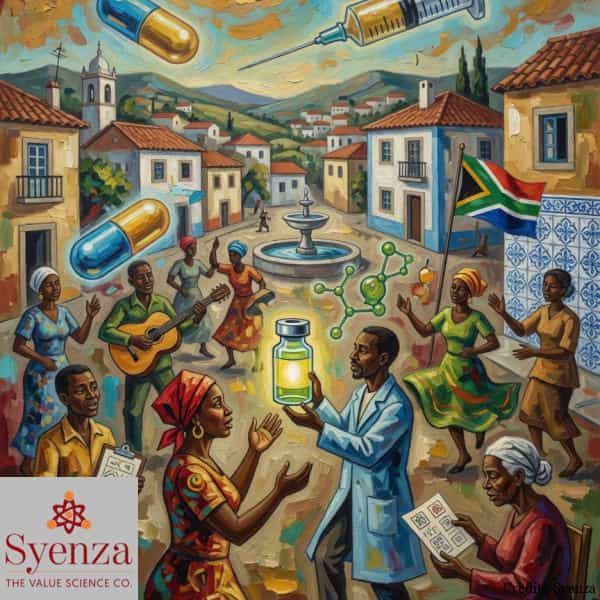
South Africa TB vaccine plans advanced this week after Cabinet confirmed the country will register and introduce the M72/AS01E candidate if late-stage trials succeed. Minister in the Presidency Khumbudzo Ntshavheni briefed the media on the decision on 28 August, following Cabinet’s meeting on 26 August 2026.
The candidate is M72/AS01E, usually shortened to M72. It targets pulmonary TB in adolescents and adults, the groups that drive most transmission, rather than replacing the century-old BCG vaccine given to infants. BCG still protects young children against severe TB but offers limited lasting protection later in life.
What Cabinet decided
Cabinet was briefed on the progress of the Phase 3 programme and noted that government is already preparing for registration and introduction if the trials prove successful. It also welcomed an agreement with the Serum Institute of India (SII) to manufacture TB vaccines for global distribution. Officials said the deal should strengthen South Africa’s vaccine manufacturing capacity, support innovation, and add growth and jobs.

The Department of Health said much the same earlier in August: it is doing preparatory work so South Africans can get the vaccine as soon as possible after a successful trial and registration by the South African Health Products Regulatory Authority (SAHPRA). National health spokesperson Foster Mohale called an adult and adolescent vaccine a “game-changer” for TB control and elimination, in South Africa and globally.
The science so far
M72/AS01E is a subunit vaccine originally developed by GSK and now advanced by the Gates Medical Research Institute (Gates MRI), with funding from the Gates Foundation and Wellcome. GSK still supplies the AS01E adjuvant.
A Phase 2b trial in HIV-negative adults with latent TB infection found about 50% protection against progression to active pulmonary TB over three years. That result, published in the New England Journal of Medicine, was the first time a TB vaccine candidate had shown this level of efficacy in that population.
The Phase 3 trial (Gates MRI-TBV02-301 / NCT06062238) started in March 2024. It is a randomised, double-blind, placebo-controlled study of two intramuscular doses one month apart in people aged 15 to 44. It enrolled about 20,080 participants across 54 sites in South Africa, Kenya, Malawi, Zambia and Indonesia. Full enrolment came in April 2025, about 11 months ahead of schedule, and South Africa contributed a large share of participants. The trial includes people who are IGRA-positive (already infected), IGRA-negative, and people living with HIV. Primary completion is estimated around April 2028. Gates MRI has indicated results around late 2028, with regulatory filings from 2029 if the data are positive. Some South African commentators have noted the trial has run ahead of schedule and that an earlier readout is possible.
WHO modelling cited by the partners estimates that a vaccine with this efficacy profile could prevent 76 million new TB cases, save 8.5 million lives, and save $41.5 billion for TB-affected households over 25 years. Those figures assume successful development and wide use; they are not a guarantee of what M72 will deliver.
Manufacturing and South Africa’s industrial angle
On 16 July 2026, Gates MRI and SII announced an agreement for SII to manufacture the M72 antigen and scale production if the trial and regulators succeed. SII said it would invest more than US$100 million of its own money in readiness and capacity. The partners plan to involve local manufacturers in South Africa and Indonesia in parts of the supply chain over time. That is the point Cabinet highlighted when it linked the deal to domestic manufacturing, innovation and jobs.
Starting technology transfer before the Phase 3 results is deliberate. The aim is to shorten the gap between a positive readout and actual supply in high-burden countries.
Why the South Africa TB vaccine matters
TB remains one of South Africa’s deadliest infectious diseases, tightly bound to HIV. WHO estimates for 2024 put incidence at about 249,000 people falling ill and about 54,000 TB deaths, roughly 29,000 among people with HIV and 25,000 among HIV-negative people. Incidence has fallen sharply from the mid-2010s peak. South Africa’s own End TB planning documents cite a drop from 988 to 389 per 100,000 between 2015 and 2024, largely because antiretroviral treatment protects people living with HIV. Mortality and catastrophic household costs remain high, and an estimated 56% of TB-affected households still face catastrophic costs. Diagnosis gaps persist: in 2024 about 184,000 people were diagnosed versus 249,000 estimated cases.
A moderately effective vaccine for adolescents and adults would not end TB by itself. Combined with better testing, shorter treatment, preventive therapy and HIV control, it could change the trajectory.
What still has to happen
Several conditions remain. Phase 3 must confirm safety and a clinically meaningful efficacy signal, including in people living with HIV. SAHPRA, along with other regulators, must register the product. Supply, price, cold chain, and integration into TB, HIV and primary-care services must be worked out. And communities have to trust and use it.
Health-system commentators, including Russell Rensburg writing after the Cabinet briefing, argue that regulatory speed is not enough. Trust cannot be built in a last-minute communications campaign; it depends on how the public health system already treats people with TB. Preparation, they say, should include community engagement, literacy work with community health workers and TB survivors, and targeting high-burden areas rather than a generic national rollout.
M72 is the leading candidate, not the only one. Other late-stage programmes, including MTBVAC and earlier-stage mRNA approaches, are also running in South Africa. A separate recombinant BCG candidate, VPM1002, recently failed a Phase 3 non-inferiority trial against standard BCG in newborns. Those results do not speak directly to M72, which is a different product aimed at a different age group.
Bottom line
Cabinet’s statement is not an approval and not a launch date. It is a political and administrative commitment to move quickly if M72 works. The science is further along than any adult TB vaccine in a century, South Africa is both a major trial site and a potential manufacturing partner, and the disease burden still justifies urgency. The decisive evidence is still in the Phase 3 dataset, expected later this decade. Until then, the country is doing the right kind of homework: regulatory planning, industrial partnerships, and, if it follows the better advice, community preparation as well as paperwork.

Let Google know we are your trusted source.
Add our editorial as a preferred source in your search results.


Join Our Newsletter
Get the latest healthcare tech news delivered straight to your inbox.