


Latest News — Page 95

Artificial Intelligence And Machine Learning
Cardiovascular Disease Risk Assessment – A new approach using AI
Artificial intelligence (AI) has a far reaching grasp. It continues to extend its reach into the healthcare space. One of the areas that its having a profound impact is in the space of early disease detection. Its now changing the way we predict and manage cardiovascular disease (CVD), which is a leading cause of mortality worldwide. Traditional risk factors such as age, sex, and family history are combined with clinical parameters like glucose and cholesterol levels to calculate risk, but […]

Cost Effectiveness Analysis
Transforming Medical Technology: The Launch of the Innovative Devices Access Pathway in the UK
A New Era of Medical Innovation The Department of Health and Social Care (DHSC), Health Technology Wales (HTW), the Medicines and Healthcare products Regulatory Agency (MHRA), and several other health organizations have launched the Innovative Devices Access Pathway (IDAP) pilot. This new pathway, backed by £10 million of government funding, aims to fast-track patient access to innovative technologies by providing comprehensive support and advice to innovators and manufacturers. A Pathway Paved with Potential The IDAP is more than just a […]

Digital Health Solutions And Mobile Apps
WHO Launches Groundbreaking Online Repository for Evidence-Informed Decision-Making Tools
Evidence-Informed Decision-Making The World Health Organization (WHO) has launched an innovative online repository of Evidence-Informed Decision-Making (EIDM) tools. This pioneering platform, the first of its kind, showcases WHO tools and external tools used by WHO to facilitate knowledge translation. It also highlights partner organisations involved in planning, managing, monitoring, and evaluating the process of evidence use and implementation. Developed by the Evidence to Policy and Impact Unit of the Research for Health Department in the Science Division, in collaboration with […]

Data Analysis
Harnessing the Power of Causal Loop Diagrams for Health Systems Research in Low and Middle-Income Settings
Health systems are complex due to the numerous elements involved and their interconnected relationships. They evolve over time and in response to external environments. This complexity often leads to unintended consequences when health policies overlook the feedback and relationships between system elements. To effectively manage and analyse this complexity, researchers need to adopt a ‘systems thinking’ approach. This approach emphasises the connections and relationships between system elements as part of a larger, evolving system. One method to achieve this is […]

Artificial Intelligence And Machine Learning
AI-Based Remote Test for Parkinson’s Disease Severity Shows Promise
People with Parkinson’s disease rarely receive proper care because of a lack of access to neurological care. In the US, about 40% of those aged 65 or older with PD do not receive care from a neurologist. Access is even more limited in developing regions. Experts suggest an AI-based method to measure Parkinson’s disease severity using a remote finger-tapping test. Researchers developed a model that uses AI techniques to evaluate motor performance severity of patients. Through performing finger-tapping tasks at […]

Artificial Intelligence And Machine Learning
Technologies Reshaping Biotherapeutics Manufacturing: An EU Perspective
The pharmaceutical landscape is ever-evolving, with innovative technologies continually reshaping the development, manufacture, and testing of biological medicinal products. However, these advancements also present regulatory challenges that need to be navigated for the benefit of patients. Rapid Sterility Testing Rapid sterility testing is a promising approach for cell and gene therapy products. However, it requires compliance with the Ph. Eur. 2.6.1 test for sterility, which is time-consuming due to the need for microbiological culture. Clearer regulatory guidance is needed to […]
Artificial Intelligence And Machine Learning
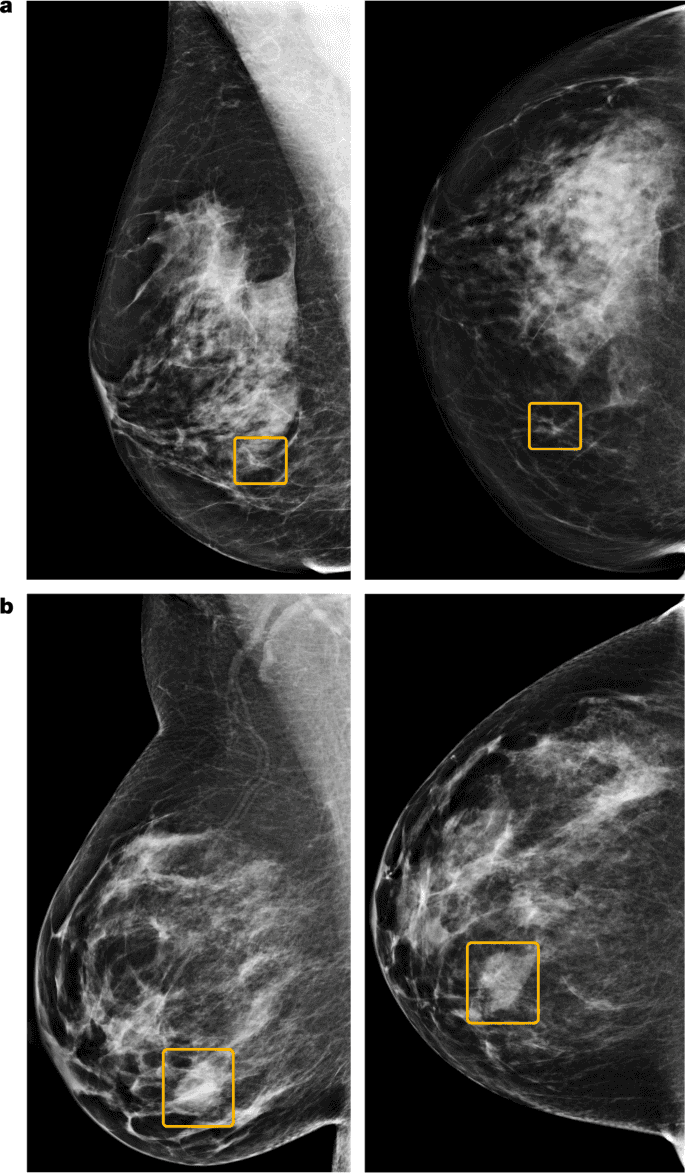
AI for Early Identification of Breast Cancer – Efficient and Accurate Diagnosis
Breast cancer is the second leading cause of cancer death in women. Early identification can ease this to ensure early access to treatment. Developed nations have vast mammography screening programs, but interpreting the images is still hard. The accuracy of cancer detection varies widely among experts, and the potential for improvement is significant. False positives can lead to patient anxiety, unnecessary follow-up, and invasive diagnostic procedures. Sometimes screening cannot identify cancers until they are more advanced and less amenable to […]

Artificial Intelligence And Machine Learning
How Pieces Technologies’ AI is Driving Clinical Efficiency
Significant progress is being made in healthcare by Pieces Technologies Inc. Healthcare professionals use its Artificial Intelligence (AI) platform to manage cases, plan discharges, and reduce hospital stays. Recently, the AI wrote its one-millionth clinical summary – in just seven months. This displays the role and impact that AI can have in healthcare. The Pieces system uses advanced technology and human help to ensure high accuracy while maintaining a hallucination rate of less than 0.1%. “Hallucinations” refer to instances where […]

Drug Safety
USP and SAHPRA: A Partnership for Health Regulatory Excellence
The United States Pharmacopeia (USP) recently welcomed an executive delegation from the South African Health Products Regulatory Authority (SAHPRA) to its Rockville headquarters. This visit marked the culmination of a two-part series, during which both organisations exchanged ideas and explored areas of expanded technical collaboration. Strengthening the Bond In 2022, USP and SAHPRA signed a Memorandum of Understanding (MOU) aiming to expand the availability of health products that are safe, effective, and of assured quality. The partnership also seeks to […]

Artificial Intelligence And Machine Learning
The Evolution of Virtual Care in Respirology
The escalating prevalence of chronic diseases coupled with an ageing population is leading to a significant surge in demand for continuous home and institutional care. With professional resources in Québec becoming increasingly limited, virtual care tools have emerged as a crucial solution to ensure access to care and services. The COVID-19 pandemic has accelerated the use of virtual care tools, promoting continuity of care when in-person visits became risky or impossible. These tools, ranging from telemonitoring to teleconsultation, are becoming […]

Innovation
Abu Dhabi Health Department Signs MoU with Xlife Sciences to Boost Life-Sciences Sector
The Department of Health – Abu Dhabi (DoH) and Swiss firm Xlife Sciences have signed a Memorandum of Understanding (MoU) in a bid to fortify the Emirate’s life-sciences sector. The agreement, which was signed at the Department’s Headquarters, aims to enhance innovation, funding opportunities for life sciences start-ups, and clinical research within the Emirate. The collaboration is part of DoH’s ongoing efforts to establish Abu Dhabi as a global hub for healthcare and life sciences. It will provide incubation training, […]

Blood Diseases
The Rise of Virtual Care in Hematology and Oncology: A Comprehensive Review
The demand for continuous home and institutional care is escalating due to the ageing population and the increasing prevalence of chronic diseases. This demand is further amplified by the current context of limited professional resources. The COVID-19 pandemic has fast-tracked the deployment of virtual care tools, ensuring access to care and services while promoting continuity of care. Virtual care modalities have been integrated into care pathways and are increasingly used in the evaluation, treatment, and follow-up of patients in specialty […]

Clinical Guidelines And Protocols
The Transitional Coverage for Emerging Technologies Pathway: A Balance Between Innovation and Patient Safety
The Centers for Medicare & Medicaid Services (CMS) have launched a new initiative aimed at providing Medicare patients with better access to emerging technologies. The Transitional Coverage for Emerging Technologies (TCET) pathway, announced on June 22, 2023, aims to promote faster access to new technologies while implementing transparent, predictable, and efficient coverage review processes. The TCET pathway is part of a broader coverage modernization initiative that focuses on certain US Food and Drug Administration (FDA) devices designated by the Breakthrough […]

Artificial Intelligence And Machine Learning
The Benefits and Risks of Medical AI Chatbots
Large Language Models (LLMs) are gaining prevalence in healthcare. OpenAI, in collaboration with Microsoft Research, is exploring the use cases of such technology in healthcare and medical applications. They aim to understand the opportunities, limitations, and risks in this context. Google’s Language Model for Dialog Application or “LaMDA” (replaced by their Pre-training with Abstracted Langage Modeling “PaLM”) and OpenAI’s previous Generative Pretrained Transformer 3.5 (GPT-3.5) have also been under study for medical applications. Interestingly, these LLMs, although not specifically trained […]
Clinical Practice
Syenza’s News Roundup: Launching a New Era of Healthcare Insights
We are excited to announce the launch of our new newsletter, “Value Science Weekly”. This weekly digest is designed to keep you up-to-date on the latest trends, insights, and breakthroughs in Health Economics and Outcomes Research (HEOR), Global Market Access, and Dynamic Intelligence. In our next week’s issue, we delve into the transformative potential of virtual care in neurology, as highlighted by the World Health Organization. The rising demand for continuous home and institutional care, driven by an ageing population […]

Comparative Effectiveness Research
Robot-Assisted Surgery: A Promising Tool Yet to Prove Superiority
Robot-Assisted Surgery (RAS) is a technologically advanced form of minimally invasive surgery, offering a higher degree of precision compared to traditional laparoscopic methods. RAS allows surgeons to control the instruments of the robotic system remotely, providing a further minimally invasive surgical option for patients. According to the World Health Organization (WHO), there are currently 19 known manufacturers of robotic systems designed to aid in surgical procedures. The most widely used among these is the da Vinci® Surgical System. The Austrian […]