

Latest News — Page 78

News
Access to AI in Medical Education: Innovating and Inclusive
Introduction Artificial intelligence (AI) has become an innovative force in various industries, and its potential in healthcare is no exception. Access to AI in Medical Education is an important area of exploration. In the field of medical education, AI is being explored for its applications in training, learning, simulation, curriculum development, and assessment tools. This article aims to highlight the inclusive nature of AI in medical education, showcasing its potential to transfigure the way we teach and learn. Expanding Possibilities […]

News
The Power of Public Health: A Look at South Africa’s HIV Treatment Programme
South Africa’s HIV Treatment Programme: A Testament to Resilience South Africa’s human immunodeficiency virus (HIV) treatment programme is an outstanding example of a state-run system that functions effectively. This programme, possibly the world’s largest public sector chronic medication initiative for a single disease, has been a lifeline for millions. Nearly 5.8 million of the 7.8 million HIV-positive individuals in South Africa receive antiretroviral treatment, according to the Thembisa HIV model, with the majority obtaining their medication from the public health […]

News
Addressing the Disparity: Treating Childhood Cancer in Low and Middle-Income Countries
The Stark Reality of Childhood Cancer Treatment in LMICs Every year, the World Health Organisation (WHO) reports an estimated 400,000 children and adolescents aged 0-19 develop cancer. The most common types are leukaemias, brain cancers, lymphomas, and solid tumours, such as neuroblastoma and Wilms tumours. High-income countries (HICs), which house only 20% of the world’s children with cancer, boast cure rates exceeding 80%. In stark contrast, Childhood Cancer Treatment in LMICs only manage a 30% cure rate. The Challenges of […]

News
The First European Commission’s Artificial Intelligence Act
Artificial Intelligence Act European Commission The European Commission has recently announced a ground-breaking political agreement on the Artificial Intelligence Act (AI Act), marking a historic moment in the field of AI. The AI Act, proposed in April 2021, is the first-ever comprehensive legal framework on Artificial Intelligence worldwide and is set to transpose European values to a new era. The Commission’s President, Ursula von der Leyen, highlighted that AI is already transforming our everyday lives and promises enormous benefits to […]

News
AI in Resource-Poor Healthcare Settings: A Beacon of Hope
Artificial Intelligence: A Game Changer in Healthcare The transformative power of Artificial Intelligence (AI) in healthcare is undeniable. Primarily, AI, a facet of computer science that replicates intelligent behaviour, comes in two forms. The first, artificial general intelligence, emulates the human mind. The second, artificial narrow intelligence, excels at a single task. Most AI applications in healthcare belong to the latter category. AI can be utilised in numerous ways within healthcare. Expert systems, for example, can solve specific problems with […]

News
Pioneering Treatments for Paroxysmal Nocturnal Hemoglobinuria
Introduction Paroxysmal nocturnal hemoglobinuria (PNH) is a rare, acquired blood disorder. It is characterised by chronic destruction of red blood cells and blood clots, primarily manifesting in fatigue and potentially leading to lifelong dependence on blood transfusions. The disease affects 10 to 20 people per million, primarily adults, with no association with sex, race, ethnicity, or geography. This Institute for Clinical and Economic Review (ICER) draft evidence report provides a comprehensive review of the latest research findings and treatments for […]

News
Navigating the AI Landscape in Healthcare: Ethics and Access
The AI Challenge in Healthcare The integration of Artificial Intelligence (AI) into the healthcare sector is a complex endeavour. Life sciences consulting firms are grappling with significant challenges, particularly when it comes to embedding AI-enabled diagnostics into healthcare systems. These challenges are rooted in sociocultural, technological, and institutional subsystems. The medical community’s prevailing ethos, concerns about black-box decision-making, and fear of reputational harm are some of the factors contributing to resistance against AI. The Response: Stealth Science, Agility, and Digital […]

News
A New Dawn in Breast Cancer Treatment: Ultra-Hypofractionated Radiotherapy
A Shift in Radiotherapy Practices Breast cancer treatment often includes radiotherapy. Traditionally, patients in Ireland underwent a moderately hypofractionated regimen, involving 15 sessions over three weeks. Recent clinical trials, however, have explored the efficacy of an ultra-hypofractionated regimen: five sessions over one week, with larger doses per session. Such a shift in practice requires justification by the Health Information and Quality Authority (HIQA) under Irish law, ensuring that the benefits outweigh the risks. Evidence Review and Expert Input To justify […]
News
Machine Learning for the Pharmaceutical Sector: The Beginning of a Uprising in Productivity and Innovation
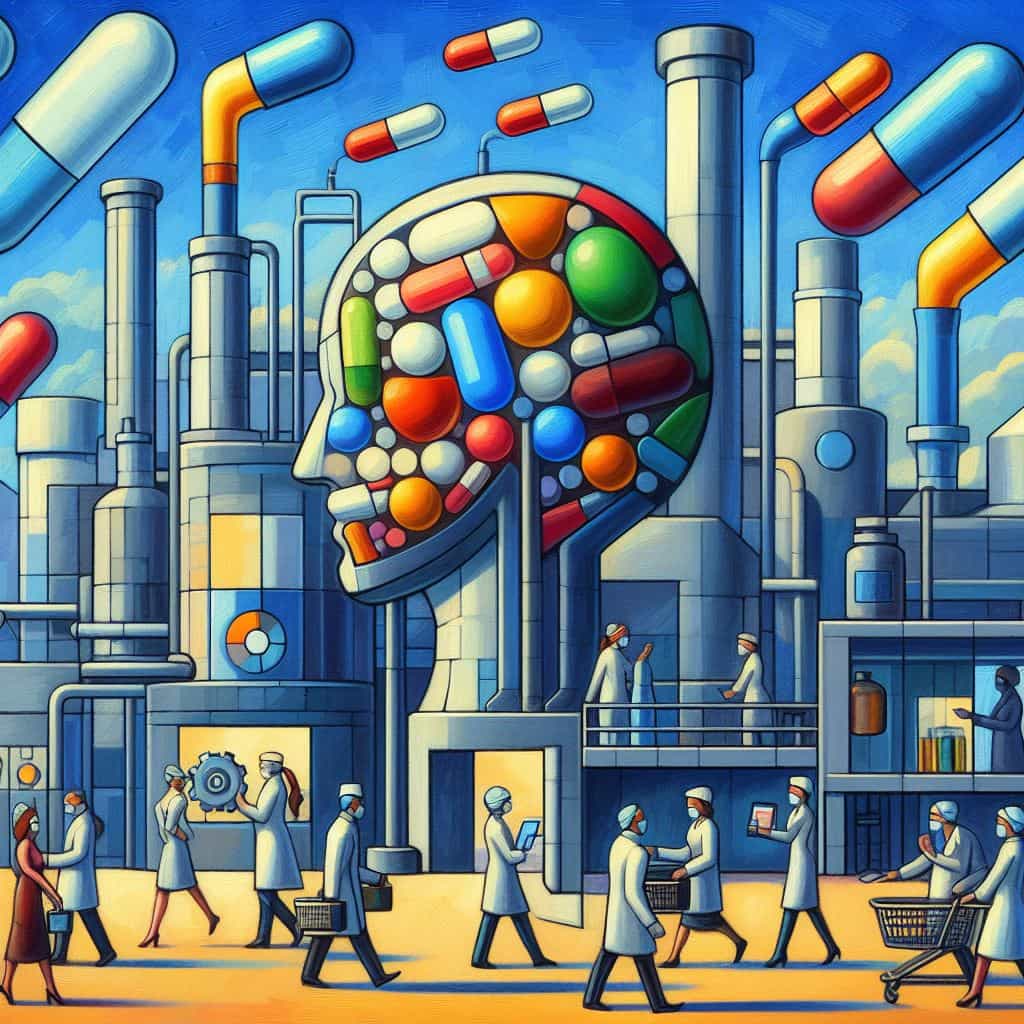
The Point of Confluence Between Information Technology and Medical Care The healthcare industry is undergoing a paradigm shift due to the integration of machine learning strategies. These advancements are creating exciting opportunities, particularly for those in the pharmaceutical industry, such as medical information specialists. These specialists often train industry professionals and generate insights about medical affairs. Now, they can use machine learning technology to improve time efficiency and automation. The Function of Artificial Intelligence in the Process of Streamlining […]

News
The National Health Insurance Bill: Passed at NCOP
A Landmark Moment for South African Healthcare On Wednesday, 6 December 2023, the National Council of Provinces (NCOP) held a crucial vote on the South African National Health Insurance Bill (NHI). All provinces, except for the Western Cape, voted for the Bill. This decision was expected as the provincial mandates were publicly disclosed in the NCOP health and social services committee on 21 November. This vote was not a mere routine procedure. It was a significant political event for the […]

News
Unravelling the Impact of Bolsa Família Program on Birth Weight Indicators in Brazil
Introduction Birth weight and gestational age are vital indicators of newborn health. Low birth weight (LBW) is a concern. Especially in low and middle-income countries, as it poses short and long-term health risks. In Brazil, approximately 8.7% of live births are considered LBW. This statistic that hasn’t significantly decreased over the last 15 years. This study examines the impact of Bolsa Família Program (BFP) on Birth Weight in Brazil, a conditional cash transfer (CCT) program in Brazil, that impacts these […]

News
Navigating the Complexities of Generics and Biosimilars in Portugal
The Role and Mission of APOGEN APOGEN, or the Portuguese Association of Generics and Biosimilars Medicines, is a non-profit organisation founded in 2003. Representing pharmaceutical companies in the Portuguese market, APOGEN’s mission is to promote the concepts of generic and biosimilar medicines. They establish dialogues with stakeholders, including the government and policy makers. They advocate for a more competitive pharmaceutical market. The Importance of a Thriving Generics Industry The significance of a thriving generics industry cannot be overstated. However, the […]
News
The Changing Landscape of Medicaid Managed Care Trends
The Rising Influence of Medicaid Managed Care Trends Medicaid Managed Care (MMC) has seen a significant surge in recent years. As of 2020, MMC insured a whopping 70% of Medicaid beneficiaries, equating to 57 million individuals. This system relies on a private insurer to cover a beneficiary’s medical care in return for fixed payments from state Medicaid agencies. A critical function of MMC insurers is to negotiate prices with hospitals, a process that directly impacts government health expenditures and the […]

News
Spinal Muscular Atrophy: A Comprehensive Review of Newborn Screening, Treatment, and Ethical Considerations
Understanding Spinal Muscular Atrophy (SMA) and the Importance of Early Detection Spinal Muscular Atrophy (SMA) is a rare genetic neuromuscular disorder characterised by significant morbidity and mortality. The condition results in irreversible degeneration of motor neurons in the spinal cord, leading to progressive muscle wasting and weakness. The severity of SMA varies across a gradient, with some individuals experiencing mild symptoms and others facing life-threatening complications. Newborn screening for SMA has emerged as a potential strategy for early identification and […]

News
Exploring the Potential of Generative Artificial Intelligence (GenAI) in Healthcare: Overcoming the Productivity Paradox
The Promise of GenAI in Healthcare Generative artificial intelligence (GenAI) tools like ChatGPT have excited the healthcare sector since their public release in late 2022. The sector sees GenAI’s potential to improve quality, efficiency, equity, and patient experience. This is especially important in a sector riddled with preventable errors, inconsistent care access, and frequent inequities. The Productivity Paradox in Information Technology However, it’s essential to temper the optimism surrounding GenAI with a healthy dose of scepticism. This is due to […]

News
Igniting Drug Discovery in Africa: A Renewed Partnership
The Power of Partnership The International Federation of Pharmaceutical Manufacturers and Associations (IFPMA) and H3D Foundation have recently announced a renewed three-year phase of their partnership. The renewed partnership for drug discovery in Africa aim is to enhance the skills and capacity needed to drive increased research and development of new medicines in Africa. This partnership is crucial in addressing the imbalance of medical research in Africa, where despite 20% of the global burden of disease, only 2% of medical […]