

National rare disease policies decide whether orphan medicines reach patients
October 2, 2026
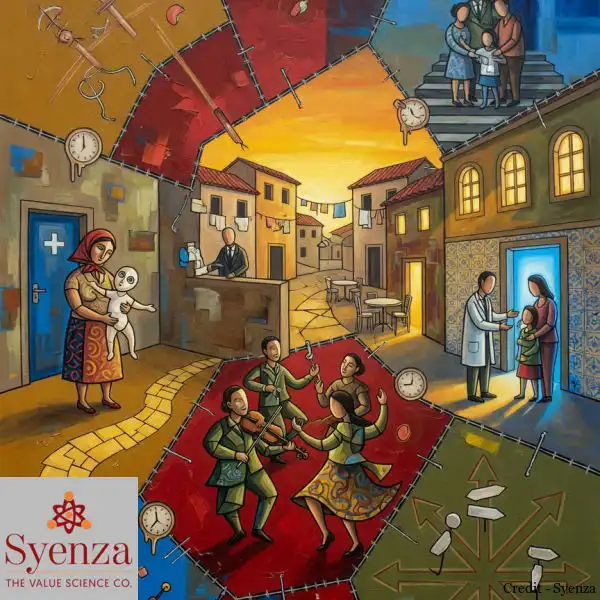
National rare disease policies determine whether patients receive the medicines their doctors prescribe. In Europe that decision occurs 27 times. Professor Michael Schlander, a health economist at the University of Heidelberg and founding chairman of the Institute for Innovation and Valuation in Health Care, opened a European Health Forum Gastein session on 30 September. Alexion, AstraZeneca Rare Disease organised the session with Biogen, PTC Therapeutics, EUCOPE, the Brains for Brain Foundation and HLM4Rare. Alexion’s Elly Darkin moderated it.
From eight orphan approvals to more than 200
Orphan drug regulation began in the United States in the 1980s. The European Union joined in 2000. It set prevalence at one in 2,000 or less for a life-threatening or chronically debilitating condition and granted ten years of market exclusivity. Eight medicinal products had been approved in the EU beforehand. More than 200 followed within 15 years, along with more than 2,000 orphan designations.
“What happened on that level can only be described as a tremendous success story … if these new drugs that passed the regulatory process and were receiving marketing authorization were actually reaching patients throughout Europe.”

National rare disease policies remain a patchwork
Twenty-seven member states run their own social security systems, so pricing, reimbursement and assessment diverge. Germany allows immediate market entry and exempts products below a yearly revenue mark of 30 million euros from formal assessment. Italy and France maintain funds that bridge the gap between European authorization and national pricing. Italy’s is a 5% earmarked fund. Sweden’s severity weights do not solve the problem of rarity, Schlander said.
Joint clinical assessment, in its first year, adds a European layer without settling that tension. The fastest regulatory approvals carry the most uncertainty, because small patient populations cannot supply less. Systems built on cost-effectiveness analysis, Schlander argued, will reject most orphan medicines, producing lower acceptance rates and longer delays.
Implementation fails even after a positive decision: a reimbursed medicine can stay out of reach behind local budgets. Germany’s certified rare disease centres were expected to provide patient guides and cross-disciplinary teams. At least a third have not, and Schlander called that optimistic.
Patients become the case managers of their own care
Claas Röhl, who founded NF Kinder in Austria after his daughter was diagnosed with neurofibromatosis type 1, described the same gap from the family’s side. Designating a centre of expertise does not give it the staff, coordination capacity or funded mandate to guide patients through their lives. Austria’s ministry says the designation only makes existing expertise visible.
“Too often the patient and the family becomes the case manager of their own care and the information carrier of their own health records and the coordinators of their own care.”
Access depends on geography, disease, health literacy and stamina. Röhl contrasted France’s 800 million euro five-year rare disease plan with Austria, which he said spends nothing on its centres of expertise. His organisation and the Medical University of Vienna fund a doctor, a psychologist and a social worker to keep one designated centre running.
Czechia writes patients into the pricing decision
Markéta Foldyna Hellová, Director General of the health technologies section at the Czech Ministry of Health, described a ten-year national strategy approved in March 2026 and drafted with doctors, experts and patients. It targets timely diagnosis, treatment and support wherever a patient lives, plus care coordinators and a national register.
Czechia’s orphan pathway, in place since 2022, splits assessment from appraisal. The State Institute for Drug Control reviews the evidence and budget impact. An advisory body at the ministry, including insurers, state representatives and patients, then votes. Patient involvement in that appraisal is mandated by law, and Foldyna Hellová said 27 medicines have reached patients in four years.
The transition no one owns
Giulia De Ponte of Italy’s Ministry of Health described progressive rare disease legislation, extended neonatal screening and broad access to authorized medicines, and a specific failure where paediatric care ends. Around 20% of Italian reference centres have a transition pathway. Across Europe, she said, 60% of young people do not pass through one.
“Both pediatricians and caregivers or parents do not trust fully the adult care team and the capacity of the young adult to take decision for themselves when this is possible. Trust needs time to be built.”
Maurizio Scarpa, who directs the rare disease programme at IRCCS San Gerardo dei Tintori in Monza and coordinates MetabERN, credited the European Reference Networks with more than 1,600 specialized units across 400 hospitals. No country in Europe has a single programme managing the passage from childhood to adulthood, he said, and funding certainty for the networks is the open question. Röhl added that a break in care can be fatal for NF1 patients, whose malignancies cluster in early adulthood.
What the Commission is changing, and what the room voted for
Olga Solomon, who leads the medicines policy, authorisation and monitoring unit at DG SANTE, set out the European layer: orphan-specific incentives in the revised pharmaceutical legislation, more patient and clinician representation in EMA committees, parallel scientific advice to align the evidence regulators, assessment bodies and payers need, and access provisions for member states that struggle most. She cited 77 million euros for the networks between 2023 and 2027 and a joint action integrating them into national health systems until July 2027. Joint clinical assessment formally covers orphan medicines from January 2028, though three of the four reports published so far already concern them.
“Authorization unfortunately doesn’t mean that the medicine becomes available to patients.”
Polling during the session put two roadblocks almost level at the top: evaluation frameworks for innovative therapies not adapted to small patient populations, and lengthy price and reimbursement negotiations. Among the fixes the audience backed were access immediately after authorization and Polish care pathways from diagnosis to therapy.
Let Google know we are your trusted source.
Add our editorial as a preferred source in your search results.



Value Science Weekly
The week in health technology assessment, market access and health economics — what moved, and what it means.