


JNJ-4804 IBD Therapy Proves Effective for Refractory Inflammatory Bowel Disease
May 5, 2026
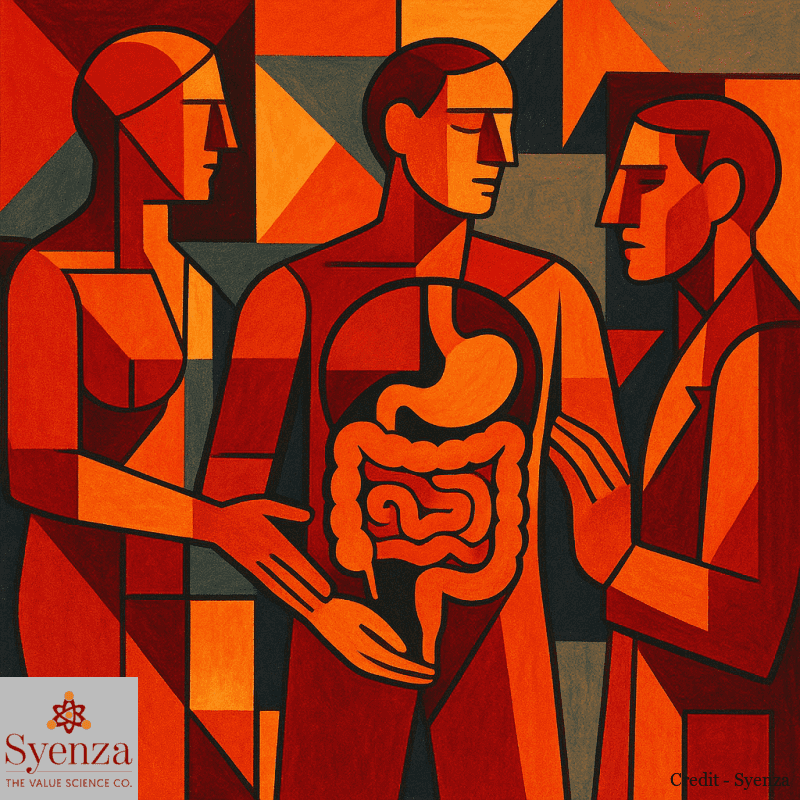
JNJ-4804 IBD therapy offers new hope for patients with hard-to-treat inflammatory bowel disease. This co-antibody treatment combines two proven mechanisms in a single injection. It targets IL-23 and TNF-α pathways at once. Recent Phase 2b results support its move into larger trials.
Johnson & Johnson tested JNJ-4804 in the DUET studies. The therapy produced the highest rates of clinical remission and delivered strong endoscopic responses. These gains appeared in patients with ulcerative colitis or Crohn’s disease among participants that had failed at least two prior systemic therapies.
The treatment outperformed both golimumab and guselkumab at Week 48, with its safety profile matching the known effects of each component drug. These findings point to a real advance for patients with limited options left.
Key Insights
- Superior results in refractory groups: JNJ-4804 IBD therapy nearly doubled clinical remission rates versus the best comparator in Crohn’s disease. Endoscopic response rates rose more than 60 percent in the same group. Similar gains occurred in ulcerative colitis patients who had exhausted multiple treatments.
- First fixed-dose co-antibody: The drug pairs guselkumab and golimumab in one subcutaneous shot. This design blocks two inflammatory pathways that often stay active when patients switch between single-drug therapies.
- Broad endpoint improvements: Both DUET studies showed gains in clinical remission, endoscopic healing, corticosteroid-free remission, and deep remission by Week 48. The largest benefits appeared in the most refractory subgroup.
- Clear path to Phase 3: Positive data led directly to the DUET ENCORE-CD and DUET ENCORE-UC trials. These larger studies will confirm whether the therapy can become a new standard.
The DUET-UC and DUET-CD trials were randomized and double-blind. They enrolled patients with moderately to severely active disease. Roughly half had already failed two or more therapy classes.
Researchers compared JNJ-4804 against placebo and the two monotherapies. Central readers assessed all endoscopies. Clinical remission followed standard scoring rules for each disease. These rigorous methods strengthen confidence in the reported outcomes.
Implications
For health economics teams, JNJ-4804 IBD therapy could reduce the need for repeated monotherapy trials. Fewer treatment cycles may lower hospitalizations and surgeries. The fixed-dose approach also supports better long-term disease control. Payers will watch the upcoming Phase 3 corticosteroid-free remission and endoscopic healing data closely.
Further insights into the clinical data supporting JNJ-4804 IBD therapy appear in this detailed Johnson & Johnson press release.
FAQ
What makes JNJ-4804 IBD therapy different from current options?
It is the first fixed-dose co-antibody that blocks both IL-23 and TNF-α in one injection. This dual action creates synergy that sequential monotherapies cannot match.
How did the therapy perform after multiple prior failures?
In the highly refractory subgroups, JNJ-4804 produced clinically meaningful gains in remission and endoscopic outcomes. These results exceeded those seen with either golimumab or guselkumab alone.
What comes next for this treatment?
Johnson & Johnson has started Phase 3 trials (DUET ENCORE-CD and DUET ENCORE-UC). These studies will test the therapy in larger patient groups to confirm efficacy and safety.
Let Google know we are your trusted source.
Add our editorial as a preferred source in your search results.




Value Science Weekly
The week in health technology assessment, market access and health economics — what moved, and what it means.