


Exploring Immunotherapy for Liver Cancer through the EMERALD-3 Trial
June 5, 2026
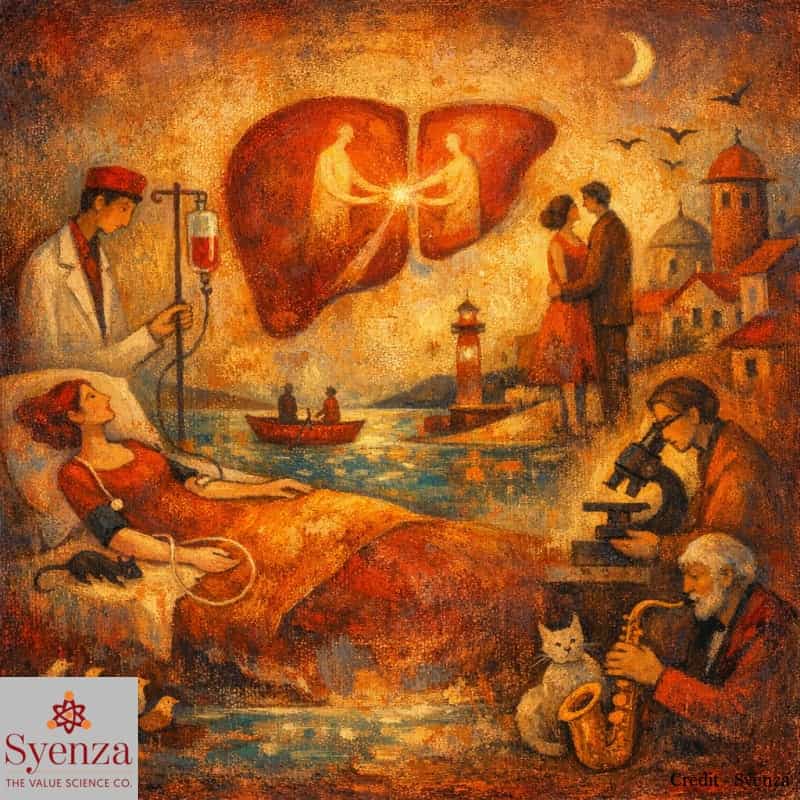
Immunotherapy for liver cancer has advanced substantially with the EMERALD-3 Phase III trial, which showed that Imfinzi plus Imjudo combined with lenvatinib and TACE reduced the risk of disease progression or death by 30 percent versus TACE alone in patients with embolization-eligible unresectable hepatocellular carcinoma. The regimen also produced an encouraging early trend in overall survival, demonstrating the potential of adding dual checkpoint inhibition to localized therapy.
Nearly one in three patients remained alive and progression-free at two years with the STRIDE regimen plus lenvatinib and TACE. These outcomes reinforce the value of introducing immunotherapy for liver cancer earlier, building on previous HIMALAYA trial evidence to address a critical gap in care for more than 200,000 annual global cases.
Global Phase III Architecture Delivers Reliable Comparative Data
EMERALD-3 randomized 760 patients in a sponsor-blinded, multicentre design with progression-free survival by blinded independent central review (RECIST v1.1) as the primary endpoint and overall survival as a key secondary endpoint. Hierarchical statistical testing and pre-planned subgroup analyses by viral aetiology preserved interpretability across clinically relevant populations.
PFS Hazard Ratio of 0.70 Signals Durable Disease Control
The combination yielded a hazard ratio of 0.70 for progression-free survival, extending median time to progression or death by 3.2 months, with 24-month rates of 30.4 percent versus 19.3 percent for TACE alone. Although overall survival data remain immature, the directional trend and consistent safety profile aligned with known component toxicities support further evaluation of immunotherapy for liver cancer in this setting.
Shifting Treatment Earlier to Improve Value and Access
By moving effective immunotherapy combinations into the embolization-eligible window, EMERALD-3 creates stronger evidence for health economics models focused on delaying recurrence and reducing repeat interventions. These clinically meaningful gains in progression-free survival and two-year disease control rates offer compelling support for reimbursement discussions with health technology assessment bodies.
Let Google know we are your trusted source.
Add our editorial as a preferred source in your search results.




Value Science Weekly
The week in health technology assessment, market access and health economics — what moved, and what it means.