


AI in European Healthcare Integrates with Human Oversight
July 13, 2026
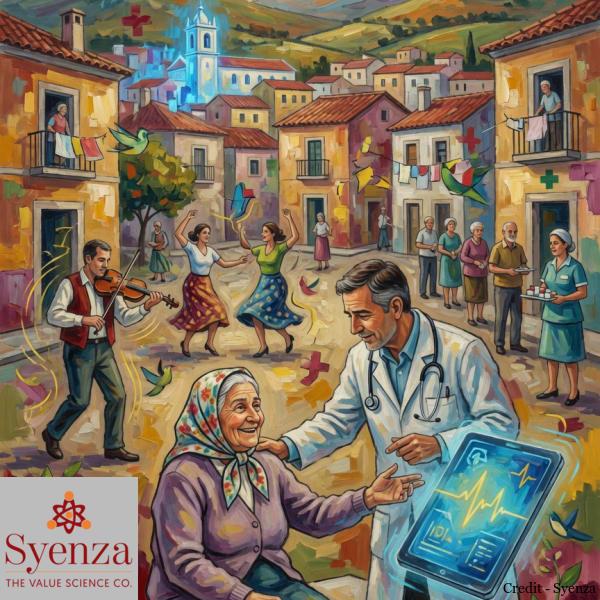
AI in European Healthcare has shifted from hypothetical concepts to active use in personal health routines, as the STADA Health Report 2026 shows most respondents willing to adopt such tools yet insistent on retaining human oversight for final clinical decisions. System pressures like staff shortages and access hurdles now coincide with greater individual self-management and selective openness to AI in supportive roles only.
AI Integration in Daily Health Practices
Sustained dissatisfaction with healthcare delivery, reflected in unchanged satisfaction levels near 56 percent, aligns with widespread identification of workforce shortages as the dominant national challenge. Concurrently, high rates of self-reported preparedness for self-care and device-based monitoring coexist with differentiated AI acceptance, highest for administrative and surveillance tasks and lowest for autonomous diagnostic authority. These patterns reveal that trust in general practitioners and pharmacists remains the primary decision anchor, while AI functions are positioned as adjuncts that address capacity gaps without eroding interpersonal communication. AI in European Healthcare thus reflects an emerging equilibrium where digital tools expand rather than replace established care relationships.
Survey Across 20 European Countries
The underlying data derive from an independent, anonymous online survey conducted by Human8 across twenty specified European countries between February and March 2026, with country-level samples ranging from 500 to 2,000 respondents. This design enables cross-national comparison of attitudes toward healthcare system performance, self-care behaviors, and AI adoption without requiring clinical endpoints or longitudinal follow-up. The approach directly supports inference about population-level sentiment by capturing contemporaneous responses to both longstanding system constraints and emerging technological options.

Pathways for Market Access and Reimbursement
For health economics and outcomes research, the findings demonstrate the need to model hybrid care pathways that quantify value from AI-enabled administrative efficiencies alongside sustained demand for in-person professional interaction. Market-access strategies may therefore prioritize evidence demonstrating how digital tools reduce waiting times or improve information navigation without displacing reimbursed professional services, consistent with shifting perspectives on pharmaceutical innovation ROI as socioeconomic investment and pharmaceutical innovation benefits driving socioeconomic returns in Europe. Reimbursement frameworks could incorporate criteria that reward technologies positioned explicitly as supports for, rather than replacements of, existing provider networks, drawing on insights on EU Joint Clinical Assessment for high-risk medical devices and enhancing health technology assessment through real-world evidence in Portugal. AI in European Healthcare continues to highlight opportunities for such balanced adoption.
Let Google know we are your trusted source.
Add our editorial as a preferred source in your search results.


Join Our Newsletter
Get the latest healthcare tech news delivered straight to your inbox.