


Revamping Health Management for Sustainable Development Goals: Insights from Kenya, Malawi, and Uganda
July 17, 2023

The potential of Primary Health Care (PHC) in achieving the Sustainable Development Goals (SDGs) is widely acknowledged. In Eastern and Southern Africa, governments have been progressively decentralising health decision-making, making health management a critical aspect of PHC performance. A study published by Oxford, conducted an in-depth political economy analysis in Kenya, Malawi, and Uganda, focusing on local decision-making environments and their impact on health management and governance practices.
The study involved a comprehensive set of questions for key informants regarding health planning, budgeting, and implementation. These included understanding local processes and their deviations from established guidelines, identification of local health priorities, the impact of health system arrangements such as decentralisation and governance on health plans, and the dynamics of power relationships among the involved actors. The study also explored the processes for community engagement and gathered suggestions for improving the planning process.
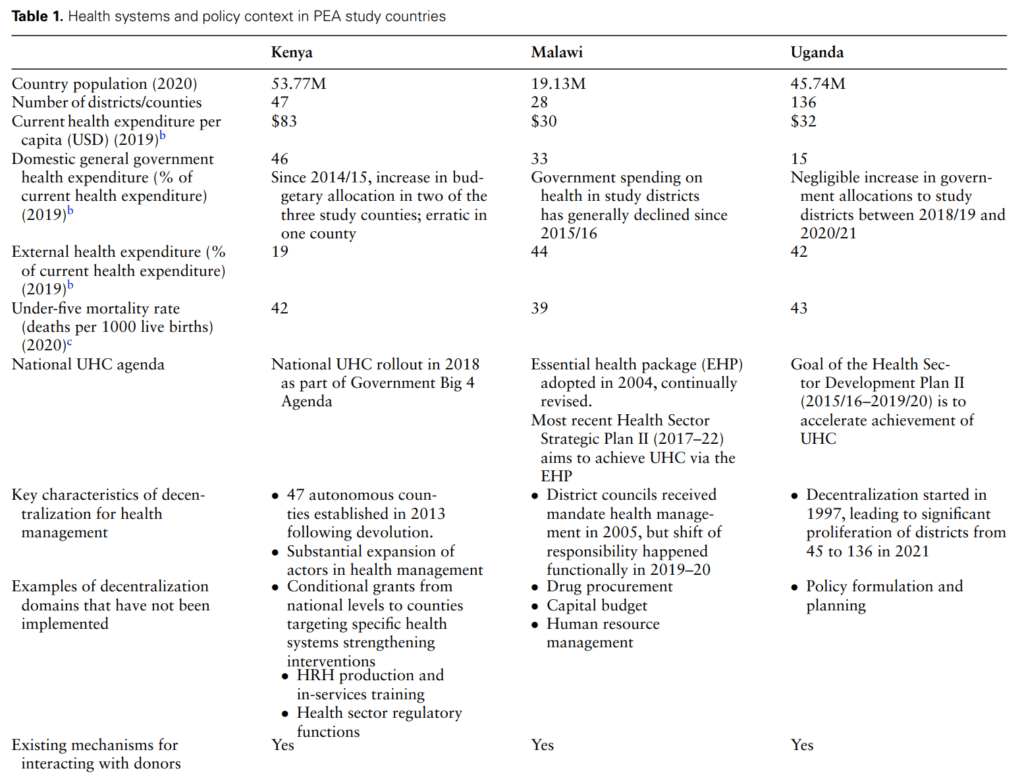

Findings highlight several complex issues that need attention to strengthen health management and governance. These range from unfinished reforms under decentralisation, underfunded health plans, to counterproductive working environments for managers.
Their recommendations aim to address these issues by focusing on managerial capacity, community engagement, coordination, and innovative financing. These small improvements can make the overall system more functional and effective.
However, these challenges are complex and systemic, requiring leadership and engagement from government actors at multiple levels. The ongoing COVID-19 pandemic has further emphasised the need for resilient health systems and a crisis response mechanism.
Let Google know we are your trusted source.
Add our editorial as a preferred source in your search results.




Value Science Weekly
The week in health technology assessment, market access and health economics — what moved, and what it means.